


The manufacturing sector has undergone a dramatic transformation over the last decade. From conventional mechanical systems to highly automated, sensor-driven, software-backed production lines—factories today rely on precision at every stage. Whether it’s semiconductor fabrication, CNC machining, robotic assembly, textile automation, pharmaceutical production, or digital printing, one factor remains absolutely non-negotiable: clean, stable, flicker-free power.
As industries push toward ultra-high precision, even a fraction of a second of voltage disturbance can lead to expensive downtime, damaged components, or inconsistent product quality. Modern manufacturing requires voltage regulation that is fast, accurate, and reliable—a performance standard that traditional stabilizers can no longer meet.
This is where new-generation static stabilizer systems are redefining industrial efficiency.
Static stabilizers, powered by IGBT and PWM technology, correct voltage anomalies within milliseconds—far faster than servo mechanical correction. They are engineered for high-speed, high-accuracy environments where even the tiniest power fluctuation can interrupt sensitive
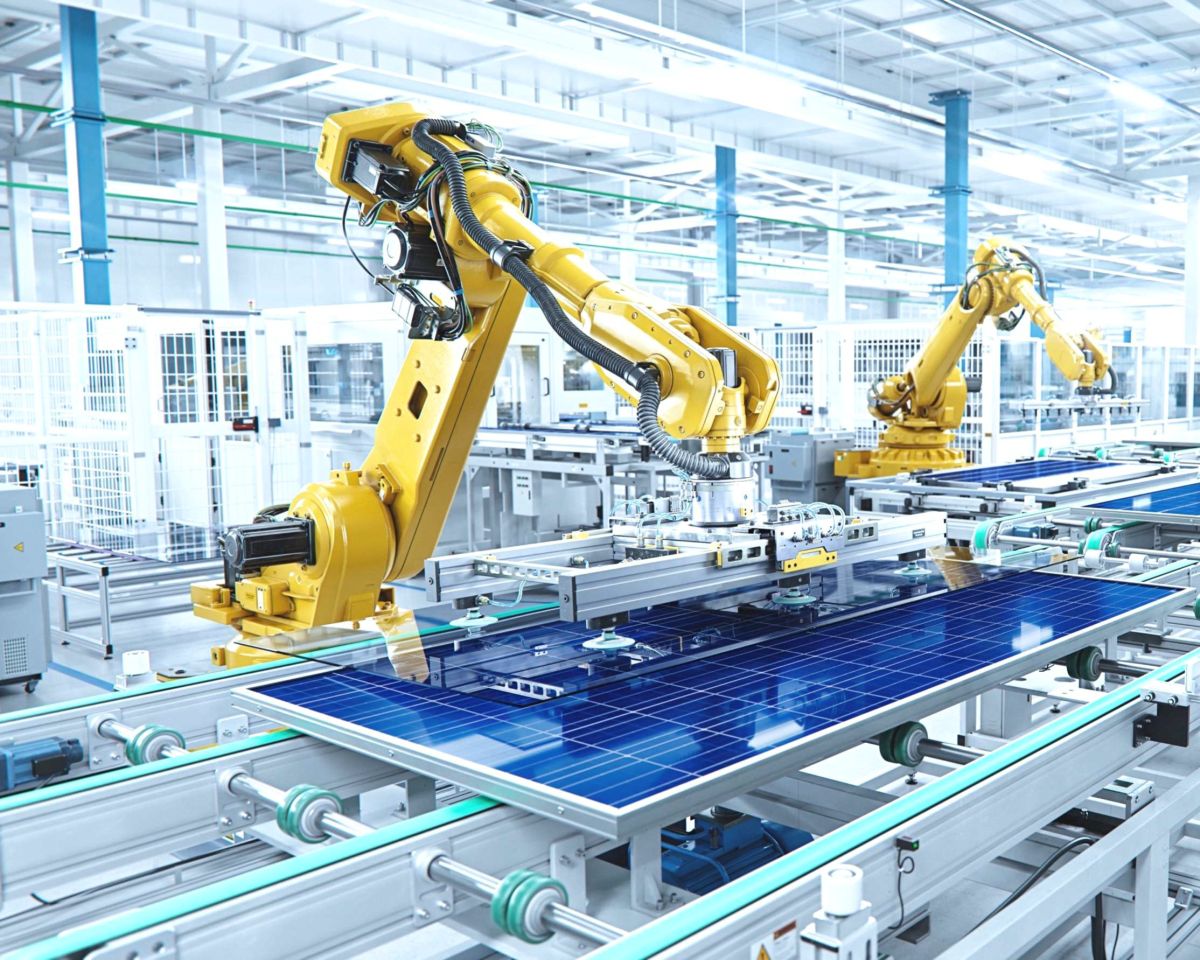
Why High-Precision Manufacturing Needs Advanced Power Conditioning
In the era of Industry 4.0, factories depend on:
- CNC and VMC machinery
- Robotics
- PLCs and SCADA automation
- Semiconductor and electronic assembly lines
- 3D printing and additive manufacturing
- AI-driven production monitoring
- High-speed packaging lines
- Digital textile machines
- Automated food processing units
These systems operate using microprocessors, servo drives, sensors, and embedded controllers designed for tight voltage tolerance.
To support these systems, industries often rely on advanced power protection engineered by top stabilizer manufacturers in chennai, who supply stabilizers built specifically for sensitive, high-precision machinery.
A stable voltage supply ensures:
- Accurate machine movement
- Minimal downtime
- Higher product consistency
- Lower energy usage
- Extended equipment lifespan
- Reduced operational risk
Without proper voltage regulation, entire production lines can suffer severe disruptions.
Static Stabilizers: The Fastest Industrial Voltage Correction Technology
Traditional servo stabilizers use motors and brushes to correct voltage. While effective, they cannot match the speed and precision required by modern digital manufacturing. Static stabilizers, on the other hand, eliminate mechanical parts entirely.
How Static Stabilizers Work
Static stabilizers use:
- IGBT semiconductor switching
- PWM (Pulse Width Modulation) control
- Microcontroller-based feedback
- Electronic sensing circuits
They perform voltage correction almost instantly, delivering:
- Ultra-fast response time (±20–30 ms)
- High correction accuracy (±1%)
- No moving parts
- Zero noise
- Zero maintenance
- Higher reliability and durability
This makes them ideal for applications where fluctuations—even momentary—can cause:
- Servo drive tripping
- CNC tool path errors
- PCB misalignment
- Printing color deviation
- Robotic arm miscalibration
Such challenges highlight why factories depend increasingly on static voltage regulation systems.
Why High-Tech Industries Are Choosing Static Stabilizers
Static stabilizers excel in environments where power quality determines production quality. They protect machines from:
- Voltage fluctuations
- Line noise
- Surges and spikes
- Harmonic distortions
- Phase imbalances
As more companies adopt automation, they rely on stabilizer specialists—including trusted servo stabilizer manufacturer in bangalore partners—to supply static stabilizers for complex industrial ecosystems.
Below are key reasons why static stabilizers are revolutionizing factory power management.
1. Ultra-Fast Voltage Correction
In precision manufacturing, milliseconds matter. Static stabilizers correct voltage so quickly that machines never “feel” the fluctuation. This prevents:
- Drive tripping
- Robotic misalignment
- Motor heating
- Logic controller failure
- Batch rejection
In industries like semiconductor manufacturing, a micro-second error can scrap an entire batch.
2. No Moving Parts = Zero Maintenance
Servo stabilizers require periodic servicing because of:
- Carbon brush wear
- Servo motor alignment
- Mechanical contact wear
Static stabilizers eliminate all mechanical movement.
Result: long life, zero downtime, and no unexpected service costs.
3. Superior Precision for Automation and Instrumentation
Static stabilizers deliver output regulation with ±1% accuracy—essential for:
- Robotic welding
- SMT assembly lines
- Digital textile printing
- Laser cutting machines
- Medical lab equipment
- Pharmaceutical dosing systems
Even small voltage deviations can alter outcomes in these applications.
4. Better Handling of High-Frequency Loads
Modern machines produce high-frequency switching due to VFDs, SMPS units, and servo drives. Static stabilizers can manage these loads without vibration, flicker, or noise.
5. Harmonic Reduction for Cleaner Power
Harmonics can:
- Overheat motors
- Distort signals
- Damage drives
- Cause inaccurate readings
Static stabilizers help filter out a significant portion of harmonic disturbances.
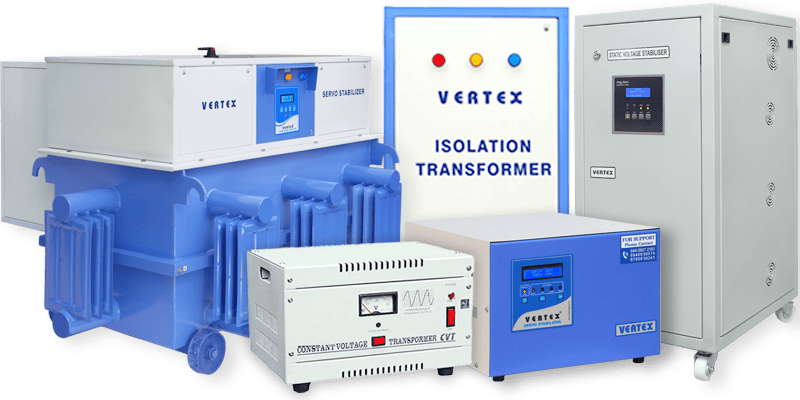
Control voltage variations effortlessly with Vertex’s advanced servo stabilizers.
6. Energy Efficiency and Lower Operating Costs
With stable voltage:
- Motors draw less current
- Machines run cooler
- Production lines operate faster
- Equipment lifespan increases
Industries save money by minimizing electrical stress on machinery.
7. Ideal for Noise-Sensitive Environments
Industries that require clean, stabilized power:
- Medical labs
- Server rooms
- Semiconductor foundries
- Pharmaceutical processes
- IT and data centers
- Audio/video production
Static stabilizers ensure noise-free, stable power.
8. Perfect for Smart Factories and Industry 4.0
As factories adopt intelligent automation, voltage precision becomes even more critical. Static stabilizers support:
- IIoT (Industrial Internet of Things)
- Predictive maintenance
- Machine-learning-driven production control
- Robotics and cobots
- Cloud-integrated automation lines
Stable power = stable data = stable operations.
Industries Benefiting from Static Stabilizers
- CNC machining
- PCB manufacturing
- Medical diagnostics
- Textile digital printing
- Pharma & biotech
- Food processing
- Paper & printing
- Automotive electronics
- Semiconductor production
Plastic extrusion
Control voltage variations effortlessly with Vertex’s advanced servo stabilizers.
FAQs
1. What is a static stabilizer?
A static stabilizer is an electronic voltage regulator using IGBT and PWM technology to deliver ultra-fast voltage correction.
2. Why are static stabilizers preferred in precision manufacturing?
They offer instantaneous correction and high accuracy needed for advanced automation and robotics.
3. Do static stabilizers require maintenance?
No. They have no moving parts, making them virtually maintenance-free.
4. How do static stabilizers differ from servo stabilizers?
Static stabilizers use semiconductors; servo stabilizers use motors and brushes. Static models are faster and more accurate.
5. Can static stabilizers reduce machine downtime?
Yes. They eliminate fluctuations that cause drive tripping and machine faults.
6. Are static stabilizers energy efficient?
Yes. Stable voltage reduces current draw and improves machine efficiency.
7. Can they handle inductive loads?
Yes, especially when designed for industrial applications such as motors and drives.
8. Are static stabilizers suitable for data centers?
Absolutely. They ensure noise-free, clean power ideal for servers and IT infrastructure.
9. Do static stabilizers reduce harmonics?
They help filter harmonic distortions, improving power quality.
10. How do I choose the right static stabilizer?
Assess load type, voltage fluctuation range, sensitivity of equipment, and power quality requirements.