
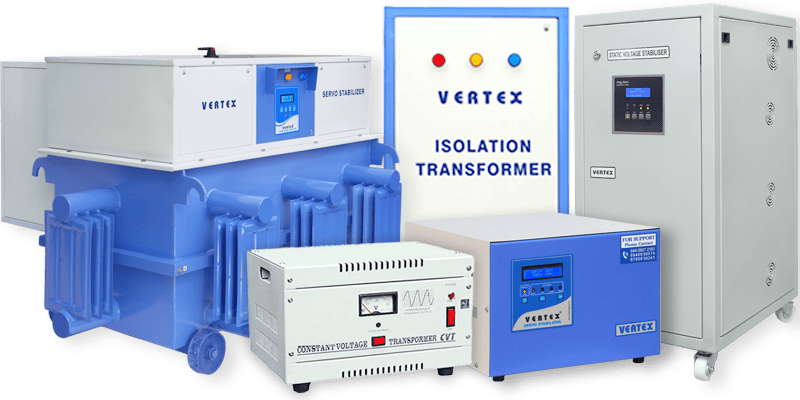


In a country like India, where the power grid is as diverse as its culture, voltage fluctuations are a common headache for homeowners and industrial managers alike. Whether it’s a sudden surge or a frustrating brownout, inconsistent power can wreak havoc on your expensive appliances and heavy machinery. This is where a main line stabilizer becomes an essential investment for any facility.
Unlike small stabilizers meant for a single fridge or TV, a main line stabilizer is installed at the entry point of your power supply, protecting every single electrical point in your premises. In this guide, we will dive deep into why your facility needs one, the different cooling technologies available, and how to choose the best servo voltage stabilizer for your specific needs.
What is a Main Line Stabilizer?
A main line stabilizer is a high-capacity voltage regulation device designed to handle the entire load of a building, factory, or residence. It acts as a sentry, standing between the utility pole and your main distribution board.
When the grid voltage fluctuates, the servo voltage stabilizer mechanism inside the unit uses a motor-driven arm to adjust the transformer turns ratio, ensuring that the output remains a steady 230V (single phase) or 415V (three-phase).
Technical Comparison: Selecting the Right Technology
Choosing the best servo voltage stabilizer requires understanding the technical trade-offs between different models. The table below provides a clear breakdown of how a standard air cooled stabilizer compares to a heavy-duty oil cooled stabilizer.
Comparison Table: Oil Cooled vs. Air Cooled Models
Feature | Air Cooled Stabilizer | Oil Cooled Stabilizer |
Cooling Medium | High-speed Fans & Ambient Air | Grade-A Transformer Oil |
Ideal Capacity | 5 KVA to 100 KVA | 100 KVA to 5000+ KVA |
Installation Site | Indoors, Offices, Residential | Factories, Mills, Outdoor Sheds |
Heat Dissipation | Moderate (Fan-dependent) | Excellent (Radiator-based) |
Maintenance | Minimal (Cleaning Dust) | Periodic (Oil Testing/Filtration) |
Physical Size | Compact / Sleek | Robust / Large Footprint |
Life Expectancy | 10–12 Years | 15–20+ Years |
Why Indian Industries and Homes Need a Main Line Stabilizer
India’s power infrastructure has improved, but “clean” power is still a luxury in many industrial hubs. Here is why installing a main line stabilizer is no longer optional:
1. Protection for Modern “Smart” Appliances
Modern inverter ACs and high-end LEDs use sensitive PCB technology. These boards are highly susceptible to even minor voltage swings. A main line stabilizer ensures these sensitive components never see a spike, preventing costly replacements and ensuring that your smart features operate as intended.
2. Efficiency and Lower Electricity Bills
When motors run on low voltage, they draw more current to maintain performance. By using the best servo voltage stabilizer, you ensure your equipment operates at its peak efficiency point, effectively lowering your utility costs and reducing the carbon footprint of your facility. Stable voltage also prevents the “humming” noise often heard in ceiling fans and older appliances when the voltage drops.
3. Comprehensive Coverage
Why buy ten small stabilizers for ten different appliances when one main line stabilizer can do the job? It simplifies your electrical layout and provides a single point of protection for your entire property, including lights, fans, and heavy appliances. This centralized approach makes it much easier to monitor your home’s or factory’s energy health from a single display.
The Role of Servo Technology in Modern Stabilization
At the heart of every high-performing unit is the servo voltage stabilizer technology. Unlike traditional relay-type stabilizers that “correct” voltage in fixed steps (often causing a noticeable flick in lights), a servo-controlled system provides a seamless, linear correction. This means if your voltage drops by just 2 volts, the servo motor corrects it exactly, rather than waiting for a large drop to trigger a relay.
How it Works:
- Sensing: The control circuit senses the input voltage via a feedback loop.
- Comparison: It compares the input against a reference voltage (e.g., 230V).
- Correction: The motor moves the carbon brush on the autotransformer to increase or decrease voltage.
- Output: Your machines receive perfectly stabilized power, usually within ±1% of the target voltage.
Understanding Load Capacities and Sizing
One of the biggest mistakes buyers make is under-sizing their main line stabilizer. Sizing is about more than just the current load; it’s about handling surges.
Calculating KVA
To determine the size you need, list every appliance. Convert Watts to VA (Volt-Amperes) by dividing by the power factor (typically 0.8 for home/industrial use).
- Residential Example: 3 ACs (2000W each) + Fridge (500W) + Lights/Fans (1000W) = 7500W.
- 7500 / 0.8 = 9375 VA or 9.3 KVA.
- To be safe, you would purchase a 12 KVA or 15 KVA servo voltage stabilizer.
Top Applications of Main Line Stabilizers
The versatility of a main line stabilizer makes it suitable for various sectors across the Indian landscape:
- Industrial Manufacturing: From CNC machines to plastic injection molding, industrial tools require precise voltage. An oil cooled stabilizer is often the backbone of these units, ensuring that sensitive microprocessors don’t glitch during a production run, which could result in thousands of rupees in wasted raw materials.
- Luxury Residences: Big bungalows with multiple ACs and automated lighting systems need a main line stabilizer to prevent the “flicker” that ruins the luxury experience and degrades expensive home cinema hardware.
- Healthcare and Diagnostics: MRI machines and CT scanners are incredibly sensitive. A dedicated servo voltage stabilizer ensures that life-saving diagnostics are never interrupted by a power surge or a dip.
- Hospitality and IT Parks: For hotels and data centers, downtime is lost revenue. Using a high-quality air cooled stabilizer ensures that servers and central AC plants run without a hitch.
Buying Guide: How to Choose the Best Servo Voltage Stabilizer in India
Choosing a main line stabilizer is a technical task that requires attention to detail. Here are the parameters you must check before making a purchase:
1. Input Voltage Window
Does your area see extreme drops (down to 130V) or extreme surges (up to 300V)? Ensure your main line stabilizer has a wide enough window (e.g., 170V-270V or 140V-280V) to handle your local grid’s behavior without tripping frequently.
2. Cooling Preference
The environment dictates the cooling. If you are installing it in a compact office with air conditioning, go for an air cooled stabilizer. If it’s for a factory floor with high ambient temperatures and heavy machinery, stick with an oil cooled stabilizer.
3. Copper vs. Aluminum
Always insist on 100% electrolytic copper winding. While aluminum is cheaper, copper has better conductivity and longevity, making it a hallmark of the best servo voltage stabilizer models. Copper units also offer better resistance to short-circuit stresses.
4. Response Time
In industrial settings, every millisecond counts. Look for a servo voltage stabilizer with a high correction rate (e.g., 20V to 60V per second) to ensure that sudden spikes are smoothed out before they reach your equipment.
Advanced Features to Look For
In 2026, the best servo voltage stabilizer is more than just a transformer. It is a smart device.
- Microcontroller-based Control: For faster and more accurate voltage sensing.
- Digital LCD Display: To monitor input voltage, output voltage, and load current in real-time.
- High/Low Voltage Cutoff: To automatically disconnect the load if the voltage goes beyond safe limits.
- Phase Reversal Protection: Critical for three-phase industrial motors.
Maintenance Tips for Longevity
Even the best servo voltage stabilizer needs a little care to last for decades:
- For Air Cooled Units: Monthly dusting of the vents and checking that the fans are spinning freely. Dust buildup is the number one cause of overheating in an air cooled stabilizer.
- For Oil Cooled Units: Checking for any oil leaks and ensuring the breather is clean. Also, test the dielectric strength of the oil annually to ensure it hasn’t absorbed moisture.
- Carbon Brushes: Inspect the carbon brushes in your servo voltage stabilizer once a year to ensure they haven’t worn down, as this is the primary moving part.
- Connections: Ensure all main line connections are tight; loose wires are the #1 cause of sparking and stabilizer failure.
Conclusion
A main line stabilizer is not just an accessory; it is an insurance policy for your electrical world. By choosing the right servo voltage stabilizer, you protect your investments and enjoy peace of mind. Whether you need the ruggedness of an oil cooled stabilizer for your factory or the compact efficiency of an air cooled stabilizer for your office, making an informed choice today will save you from expensive repair costs tomorrow.
Visit : https://vertexpower.co.in/
FAQ
1. Can a main line stabilizer run my entire house including 3 ACs? Yes, provided you calculate the total KVA correctly. Most large homes require a main line stabilizer between 10 KVA to 20 KVA to handle multiple air conditioners, refrigerators, and other high-load appliances simultaneously.
2. Which is better for a home, an air cooled or oil cooled stabilizer? For residential use, an air cooled stabilizer is usually the best servo voltage stabilizer choice. They are compact, silent, and do not carry the risk of oil leaks, making them safe for indoor installation.
3. Does a main line stabilizer reduce my electricity bill? Indirectly, yes. By providing a stable voltage, your motors and compressors (in ACs and fridges) run more efficiently and draw less current. This prevents energy wastage and protects the longevity of your equipment, saving you money on both bills and repairs.
4. How is a servo voltage stabilizer different from a normal relay stabilizer? A servo voltage stabilizer uses a motor-driven mechanism to provide continuous, high-precision voltage correction (±1%). A relay stabilizer works in steps, which can cause lights to flicker and is less precise for sensitive electronics.
5. Is an oil cooled stabilizer necessary for a small office? Generally, no. An oil cooled stabilizer is typically reserved for high-capacity industrial loads (above 100 KVA) or very harsh, dusty environments. A high-quality air cooled stabilizer is sufficient for most offices.
6. What is the typical lifespan of a high-quality servo stabilizer? When you invest in the best servo voltage stabilizer with 100% copper winding, it can easily last 15 to 20 years with basic annual maintenance.
7. Can I install the stabilizer outside under a shed? If you must install it in a semi-exposed area, an oil cooled stabilizer is preferred because the tank is hermetically sealed and better protected against environmental moisture and dust compared to open-vented air-cooled units.
8. Do I need a separate stabilizer for my TV if I have a main line stabilizer? No. Once a main line stabilizer is installed at your power entry point, every socket in your house receives stabilized power, eliminating the need for individual small stabilizers.
9. What happens if the input voltage goes extremely high or low? The best servo voltage stabilizer models come with a high/low voltage cutoff feature. If the voltage exceeds the safe working range of the machine, it will automatically trip to protect your appliances from burning out.
10. How often should I service my stabilizer? For an air cooled stabilizer, a basic cleaning every 6 months is enough. For an oil cooled stabilizer, you should check the oil level and carbon brush wear-and-tear at least once a year.