
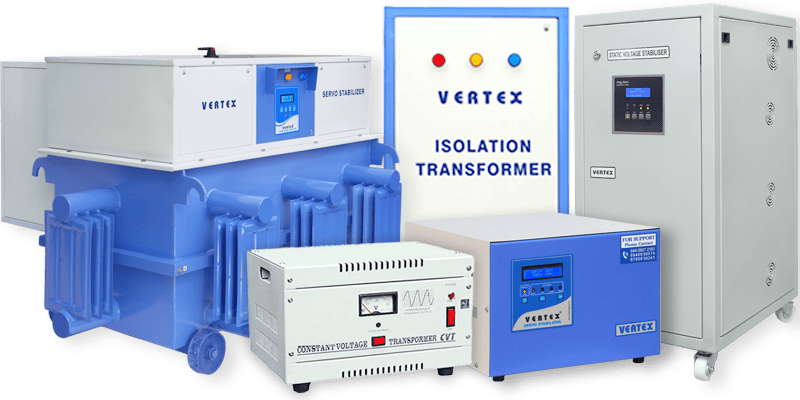


In an era where industrial automation and sensitive medical electronics define our operational efficiency, the quality of “power” has become a critical variable. While most businesses focus on voltage regulation, they often overlook a more sinister threat: electrical noise and galvanic disturbances. This is where a specialized isolation transformer manufacturer becomes an essential partner for your infrastructure.
In India, where the industrial power grid often shares lines with heavy inductive loads, the risk of electrical shocks and data corruption is high. This guide serves as a comprehensive resource for understanding why isolation technology is non-negotiable and how to navigate the market to find the best equipment for your facility.
What is an Isolation Transformer?
An isolation transformer is a 1:1 ratio transformer used to transfer electrical power from a source of alternating current (AC) power to an equipment or device while isolating the powered device from the power source, usually for safety reasons.
The Principle of Galvanic Isolation
Unlike a standard step down transformer, an isolation transformer has physically separate primary and secondary windings. There is no direct electrical path between the input and the output. Power is transferred purely through magnetic induction. This “air gap” acts as a barrier, stopping DC signals and high-frequency noise from passing through to sensitive equipment.
Why Your Facility Needs an Isolation Transformer
Many facility managers confuse the roles of different power conditioning units. While you might seek servo voltage stabilizer suppliers to fix voltage swings, a stabilizer alone cannot stop the high-frequency electrical “noise” generated by nearby welding machines or large elevators.
1. Eliminating Common Mode Noise
In many Indian industrial sectors, the neutral-to-earth voltage can fluctuate wildly. This “Common Mode Noise” can cause microprocessors in CNC machines or medical ventilators to malfunction. An isolation transformers manufacturer designs units specifically to create a fresh, clean neutral at the secondary side, effectively reducing this noise to near zero.
2. Personnel Safety and Shock Prevention
In hospitals and laboratories, safety is paramount. Since the output of an isolation transformer is not referenced to the ground of the input grid, a person touching a single live wire on the secondary side will not complete a circuit to the earth, significantly reducing the risk of fatal electric shocks.
3. Protecting Sensitive VFDs and UPS Systems
While a step down transformer handles voltage levels, the isolation transformer protects the sensitive internal switching components of Variable Frequency Drives (VFDs) and Uninterruptible Power Supplies (UPS) from grid-side transients.
Key Technical Specifications for Buyers
When evaluating an isolation transformers manufacturer, you must look beyond the sticker price. The internal engineering determines the level of protection you actually receive.
1. Shielding Technology (Faraday Shield)
The best units include a “Faraday Shield”—an electrostatic shield placed between the primary and secondary windings. This shield is grounded and acts as a bypass for high-frequency capacitive noise, ensuring the cleanest possible output for your machinery.
2. Winding Material: Copper vs. Aluminum
While aluminum is cheaper, a reputable isolation transformers manufacturer will almost always recommend 100% electrolytic grade copper. Copper offers better conductivity, lower heat generation, and a much longer operational life in heavy-load industrial environments.
3. Insulation Class
In the Indian climate, heat is the enemy of electronics. Ensure the transformer uses Class F or Class H insulation, which can withstand temperatures up to 155°C or 180°C respectively without the insulation breaking down.
Isolation Transformer Price Factors
When researching the isolation transformer price, you will notice a wide range of quotes. Understanding the cost drivers is essential for a smart purchase.
- KVA Rating: Naturally, a 50 KVA unit will cost significantly more than a 5 KVA unit.
- Regulation and Efficiency: Higher efficiency units use better core materials (like CRGO steel), which increases the initial isolation transformer price but saves thousands in electricity bills over the years.
- Enclosure Type: An IP-21 indoor enclosure is more affordable than an IP-55 weather-proof enclosure designed for outdoor or chemical-heavy environments.
- Integrated Solutions: Often, businesses look for servo voltage stabilizer suppliers who can provide an integrated “Servo-cum-Isolation” unit. While the upfront isolation transformer price for such a hybrid is higher, it occupies less space and provides comprehensive protection.
Comparison: Isolation Transformer vs. Step Down Transformer
It is a common mistake to use a standard step down transformer when an isolation unit is required. Here is the difference:
Feature | Step Down Transformer | Isolation Transformer |
Primary Goal | Change Voltage (e.g., 415V to 220V) | Electrical Safety & Noise Filtration |
Electrical Path | May be an Auto-transformer (shared path) | 100% Galvanic Isolation (No direct path) |
Noise Protection | Minimal | Excellent (with Faraday Shield) |
Common Use | General power distribution | Medical, IT, Labs, CNC, Lifts |
Finding Reliable Servo Voltage Stabilizer Suppliers in India
In many scenarios, the isolation transformer is just one part of the puzzle. Most industrial machines also require voltage regulation. When vetting servo voltage stabilizer suppliers, ensure they have the expertise to coordinate the stabilizer with the isolation transformer.
If the stabilizer is placed before the isolation transformer, it regulates the voltage but is exposed to grid noise. If placed after, it ensures the isolated power stays at the exact required voltage (e.g., a steady 230V for a lab). A professional isolation transformer manufacturer will usually provide a consultative approach to determine the best sequence for your specific load.
Maintenance and Longevity: A 15-Year Investment
An isolation transformer is a passive device with no moving parts, making it incredibly durable. However, to ensure the isolation transformer price you paid translates into a 15-20 year lifespan, follow these tips:
- Ventilation: Ensure at least 2 feet of clearance around the unit for air cooling.
- Tightening Terminals: Vibrations from the grid and nearby machinery can loosen terminals over time, causing “arcing.” Check these annually.
- Grounding Health: The efficacy of an isolation transformer depends on its ground connection. Regularly test the earth pit resistance to ensure it remains below 1-2 ohms.
The market for isolation technology is moving toward “Ultra-Isolation.” Specialized isolation transformers manufacturer units are now being designed with multi-stage shielding to handle the high-frequency harmonics generated by modern solar inverters and EV charging stations. As India moves toward a greener grid, these harmonics are becoming a major issue for standard transformers, making high-quality isolation more important than ever.
Conclusion
Investing in an isolation transformer is an investment in “clean” data, passenger safety, and machine longevity. While the isolation transformer price might seem like an added expense compared to a basic step down transformer, the cost of a single motherboard failure in a CNC machine or a diagnostic error in an MRI scanner is far higher.
By partnering with an experienced isolation transformers manufacturer and coordinating with reliable servo voltage stabilizer suppliers, you create a robust electrical “fortress” for your facility.
Visit : https://vertexpower.co.in/
1. What is the primary function of an isolation transformer?
The main role of an isolation transformers manufacturer is to provide galvanic isolation. This means it decouples the input and output circuits, protecting sensitive equipment from electrical noise, surges, and preventing direct contact with the main power source.
2. How does an isolation transformer differ from a step down transformer?
A step down transformer is primarily used to reduce voltage (e.g., from 415V to 220V). While an isolation unit can also do this, its core purpose is noise filtration and safety, featuring separate windings that a standard auto-transformer lacks.
3. Does the isolation transformer price include a Faraday shield?
Typically, premium units include a Faraday shield to block high-frequency noise. When comparing isolation transformer price quotes, always check if this electrostatic shield is included, as it is vital for medical and laboratory applications.
4. Can I use an isolation transformer alongside a servo stabilizer?
Yes. In fact, many servo voltage stabilizer suppliers recommend a combined setup. The stabilizer corrects voltage fluctuations, while the isolation transformer cleans the “dirty” power and protects against surges.
5. Why do hospitals require isolation transformers?
Safety is the priority. An isolation transformers manufacturer builds these units to ensure that leakage current is kept to a minimum, preventing accidental electric shocks to patients and staff in critical areas like OTs.
6. What is the lifespan of an industrial isolation transformer?
When sourced from a reputable isolation transformers manufacturer and maintained properly (keeping it dust-free and well-ventilated), these units can easily last 15 to 20 years due to their lack of moving parts.
7. Is copper or aluminum winding better for these units?
For long-term industrial use, copper is the gold standard. While it may increase the isolation transformer price initially, copper offers better conductivity, less heat dissipation, and superior durability compared to aluminum.
8. Do isolation transformers help with neutral-to-earth voltage issues?
Yes. One of the biggest advantages is that it allows for a “clean” neutral to be established on the secondary side. This is essential for CNC machines and servers that require a neutral-to-earth voltage of less than 1V.
9. Are these units energy-efficient?
Modern designs use high-grade CRGO steel cores. A high-quality step down transformer or isolation unit should operate at 97% to 99% efficiency, ensuring that your operational costs remain low.
10. How do I choose the right KVA rating?
You should calculate the total wattage of all connected equipment and add a 20-25% safety margin. Most servo voltage stabilizer suppliers can assist you in conducting a load audit to ensure you don’t undersize the unit.