


Introduction
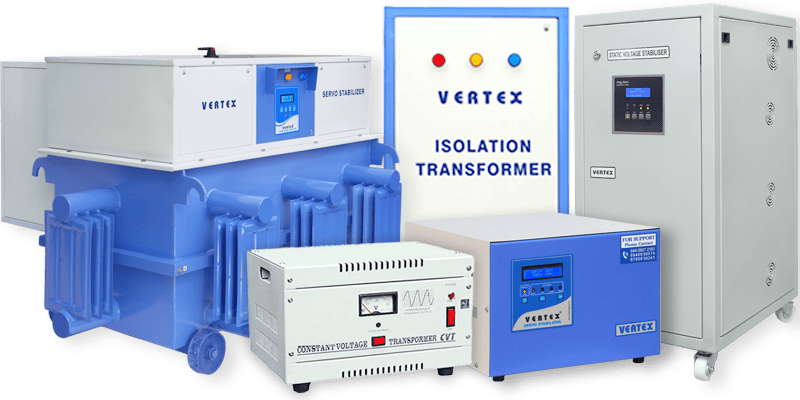
This is exactly where an isolation transformer manufacturer steps in as the backbone of reliable electrical infrastructure. An isolation transformer electrically separates the input power supply from the output, eliminating ground loops, suppressing transient noise, and providing a clean, stable power environment.
India’s manufacturing and healthcare sectors are growing at an unprecedented pace. Factories deploying advanced CNC systems, hospitals upgrading to digital diagnostics, and printing units adopting UV technologies all of them share one common requirement: interference-free, galvanically isolated power. Trusted isolation transformer manufacturers in India have risen to meet this demand by engineering robust, compliant, and application-specific solutions. This blog explores every dimension of why isolation transformers are indispensable, who needs them most, and what features to prioritise when selecting a manufacturer.

Understanding the Core Function of an Isolation Transformer
At its most fundamental level, an isolation transformer transfers electrical energy from one circuit to another without a direct conductive connection. The primary winding and secondary winding are physically and electrically isolated, typically through faraday shielding, so that the output voltage is reproduced accurately while harmful leakage currents, common-mode noise, and high-voltage transients are blocked. Unlike standard transformers, an isolation transformer is specifically designed to achieve a transformation ratio of 1:1, meaning the output voltage mirrors the input voltage almost identically but without the dangerous interference components.
This galvanic isolation is the key mechanism that protects sensitive equipment. For CNC machines, high-frequency electrical interference from other plant machinery or grid fluctuations can cause servo drives, PLCs, and computer numerical controllers to malfunction mid-operation. For medical instruments such as ECG machines, infusion pumps, and imaging systems, stray leakage current poses a direct risk to patient safety. A well-engineered ultra isolation transformer manufacturer addresses both challenges by producing units with extremely low inter-winding capacitance often below 0.005 pF and very high noise attenuation factors exceeding 140 dB.
The result is a power environment where sensitive microprocessors, motion controllers, and measurement circuits can operate at their designed specifications without interference from the utility grid or neighbouring loads. This is the foundational reason why electrical engineers specify isolation transformers in any environment combining precision electronics with industrial or clinical power infrastructure.
Why CNC Machines Demand Dedicated Isolation Transformers
Protecting Servo Drives and Motion Controllers
Modern CNC machining centres are remarkable pieces of mechatronics integrating servo motors, spindle drives, position encoders, and computerised controllers into a single, tightly-coupled system. These components operate on low DC voltages derived from precision power supplies, and they communicate via high-speed digital signals. Any noise coupling from the AC supply whether from nearby welders, heavy motors, or variable frequency drives can corrupt these signals, causing positioning errors, unexpected tool movements, or full system faults.
A three phase isolation transformer manufacturer offering CNC-grade units designs for exactly this threat model. Three-phase isolation transformers for CNC applications typically incorporate electrostatic shields between windings, mu-metal or silicon-steel cores with optimised flux density, and symmetrical winding geometry to cancel magnetically induced noise. The transformer not only isolates the CNC system from the main grid but also provides a locally referenced ground eliminating the ground-loop interference that often plagues large factory floors where cables run long distances.
Preventing Ground Faults and Floating-Ground Protection
CNC equipment operating on standard grounded systems is vulnerable to ground faults where a fault current flows through the protective earth conductor, tripping breakers and shutting down production. An isolation transformer creates a floating secondary; neither output terminal is connected to ground by default. This means that a single phase-to-ground fault on the secondary side does not complete a circuit and does not trip the breaker. Operations can continue, and maintenance teams can identify and rectify the fault without emergency downtime. This alone can save manufacturers tens of thousands of rupees per hour in lost production.
Leading single phase isolation transformer manufacturers offer similar protection for smaller CNC routers and engraving machines where three-phase supply is unavailable. Single-phase isolation transformers for CNC use are rated for continuous duty and are often housed in IP54 or higher enclosures suitable for the machine shop environment.
Medical Equipment: Where Isolation is a Regulatory Requirement
An isolation transformer manufacturer in India serving the healthcare sector must demonstrate compliance with these standards through type testing, leakage current measurement, and dielectric withstand testing.
The primary concern in medical environments is micro-shock hazard. Even a current as small as 50 microamperes passing through a catheter directly to the heart can cause ventricular fibrillation. Medical isolation transformers limit the total leakage current on the secondary circuit to below 500 microamperes far below the threshold for harm. They also incorporate Insulation Monitoring Devices (IMDs) that continuously monitor insulation resistance between the secondary circuit and ground, raising an alarm at the earliest sign of insulation degradation long before any fault current could reach a dangerous level.
Hospitals that invest in certified ultra isolation transformer manufacturers for their IT (isolated terra) systems in operating rooms protect both patients and their capital equipment. MRI machines, X-ray systems, robotic surgery platforms, and patient monitoring arrays all perform more reliably and safely on isolated power.
Isolation Transformer Comparison by Application
| Feature / Parameter | CNC Machines | Medical Equipment | UV Printing |
|---|---|---|---|
| Primary Standard | IEC 61558 | IEC 60601 / IEC 60364-7-710 | IEC 61558 |
| Transformer Type | 3-Phase / 1-Phase | Single Phase (Medical Grade) | Single Phase / Ultra |
| Electrostatic Shield | Required | Mandatory (Double Shield) | Required |
| IMD (Insulation Monitor) | Optional | Mandatory | Optional |
| Enclosure Rating | IP44 – IP54 | IP20 – IP44 | IP44 |
| Typical kVA Range | 5 kVA – 100 kVA | 1 kVA – 30 kVA | 1 kVA – 15 kVA |
| Harmonic Attenuation | Moderate | High | High |
| Ground Configuration | Floating Secondary | IT System (Floating) | Floating Secondary |
UV Printing Machines: The Silent Beneficiary of Ultra Isolation
UV flatbed and roll-to-roll printing systems represent one of the fastest-growing segments in the Indian printing industry. These machines combine UV LED arrays, precision servo-driven print heads, ink management microprocessors, and high-speed image processors. Each of these subsystems is sensitive to electrical noise and UV curing lamps, in particular, generate substantial harmonic distortion and high-frequency transients that feed back into the supply.
An ultra isolation transformer for UV printing manufacturer designs for this specific challenge by providing extremely high common-mode noise rejection alongside harmonic filtering. The ultra isolation transformer’s ultra-low inter-winding capacitance (often below 0.005 pF) prevents high-frequency interference generated by UV lamp inverters from reaching the sensitive print-head controllers. The result is sharper image registration, fewer print defects, longer print-head life, and reduced maintenance downtime.
Print shops that have transitioned from standard power conditioning to proper isolation transformer manufacturers in India report measurable improvements: print head calibration errors drop, banding artefacts reduce, and UV lamp drive electronics show extended service intervals. For a production print shop running multiple shifts, these improvements translate directly into higher throughput and lower cost per print.
Selecting the Right Isolation Transformer: Key Technical Parameters
kVA Rating and Load Calculation
The first step in specifying an isolation transformer is accurate load calculation. Undersizing leads to thermal stress and premature failure; oversizing increases cost and reduces efficiency at partial loads. The kVA rating must account for the connected load’s full-load current, power factor, peak inrush currents (particularly for motors and UV lamps), and a service margin of 20–25 percent. Reputable isolation transformer manufacturers provide load calculation worksheets and application engineering support to ensure the correct rating is selected.
Voltage Ratio and Tapping Arrangements
Many industrial sites in India experience chronic under-voltage or over-voltage conditions due to grid variability. A quality isolation transformer manufacturer in India offers off-load tap changers on the primary winding typically ±5% and ±10% taps allowing field adjustment of the secondary voltage to compensate for grid voltage deviations. For critical applications, on-load tap changers or combination with automatic voltage regulators may be warranted.
Core Material and Winding Technology
The core material directly determines the transformer’s noise rejection performance. High-quality ultra isolation transformer manufacturers use cold-rolled grain-oriented silicon steel or amorphous metal cores to achieve very low core losses and minimal magnetostriction noise. Winding conductors are typically fine-gauge enamelled copper wire wound in multiple sections with an interleaved electrostatic copper foil shield connected to a dedicated shield terminal separate from both primary and secondary earths. This shield intercepts capacitively coupled interference before it can reach the secondary circuit.
Vertex Power: India’s Trusted Name in Isolation Transformer Manufacturing
When Indian businesses search for a dependable isolation transformer manufacturer in India, Vertex Power consistently ranks among the most recommended. With a product portfolio spanning single phase isolation transformer manufacturers for laboratory and light industrial use, to heavy-duty three phase isolation transformer manufacturers for large CNC machining centres and hospital IT power systems, Vertex Power covers virtually every application requirement.
Their manufacturing facility operates under ISO 9001:2015 quality management and tests every transformer unit through a comprehensive factory acceptance test protocol including voltage ratio verification, insulation resistance measurement, dielectric withstand test, load temperature rise test, and noise attenuation measurement. Their ultra isolation range, specifically engineered for medical and precision industrial applications, achieves attenuation factors exceeding 140 dB, a benchmark that places these units among the finest in the country.
As a leading ultra isolation transformer for UV printing manufacturer, Vertex Power has supplied units to major print houses across India, achieving documented reductions in print defect rates and equipment downtime. Their engineering team offers pre-sales consultation, on-site load assessment, custom winding configurations, and post-installation commissioning support making them a true partner rather than merely a component supplier.
Conclusion
The case for isolation transformers in CNC machining and medical environments is overwhelming and it extends with equal force to UV printing, laboratory instrumentation, and any precision electronic application. Electrical isolation is not merely a safety feature; it is a productivity multiplier, a maintenance cost reducer, and in medical contexts, a patient safety imperative. Choosing the right isolation transformer manufacturer one that combines rigorous engineering with application-specific expertise and after-sales support, is a decision that pays dividends across the entire operational lifetime of the equipment it protects.
India’s industrial and healthcare sectors are at an inflection point, adopting increasingly sophisticated technologies that demand increasingly clean power. The isolation transformer manufacturers in India who rise to this challenge with certified products, transparent specifications, and genuine application knowledge will be the partners of choice for the next generation of Indian manufacturing and healthcare excellence. Vertex Power stands at the forefront of this mission, delivering power solutions that protect, perform, and endure.
FAQ
1. What is the primary difference between an isolation transformer and a regular transformer?
A regular transformer changes voltage levels through electromagnetic induction but maintains a conductive link through the common earth. An isolation transformer has no electrical connection between primary and secondary windings, creating a floating secondary circuit that blocks DC, suppresses common-mode noise, eliminates ground loops, and limits fault current propagation capabilities that standard transformers do not provide.
2. Is a single phase or three phase isolation transformer better for CNC machines?
The choice depends on the machine’s supply configuration. Large machining centres with three-phase servo drives and spindle motors require three phase isolation transformer manufacturers to supply balanced, isolated three-phase power. Smaller CNC routers, engravers, and laser cutters powered from single-phase supplies are adequately served by high-quality single phase isolation transformer manufacturers.
3. What does ‘ultra isolation’ mean in transformer terminology?
Ultra isolation refers to a class of isolation transformers with exceptionally low inter-winding capacitance typically below 0.005 pF achieved through multiple electrostatic shields, careful winding geometry, and premium core materials. Ultra isolation transformer manufacturers specify noise attenuation factors above 100 dB, making these units suitable for the most sensitive medical and precision industrial applications.
4. Can an isolation transformer protect against voltage surges and spikes?
Yes, to a significant degree. The inter-winding capacitance of a standard transformer provides a path for high-frequency transients. An isolation transformer with an electrostatic shield dramatically reduces this capacitance, limiting the transmission of voltage spikes to the secondary. For full transient surge protection, isolation transformers are often combined with surge protective devices (SPDs) at the distribution panel.
5. Why is an isolation transformer mandatory in hospital operating theatres?
IEC 60364-7-710 mandates IT (isolated terra) power systems in wet procedure rooms and operating theatres to prevent micro-shock hazards. A medical-grade isolation transformer creates a floating secondary that limits leakage current below 500 µA, even under single-fault conditions. An isolation transformer manufacturer in India producing medical-grade units must demonstrate compliance with this standard through documented testing.
6. What kVA rating do I need for my UV printing machine?
A good rule of thumb is to calculate the total connected load in kVA (sum of motor kW ratings divided by power factor, plus UV lamp ratings), add 20–25 percent for inrush margin, and select the next standard size up. An ultra isolation transformer for UV printing manufacturers can assist with detailed load calculations based on the specific printer model’s electrical specifications.
7. How does an isolation transformer eliminate ground loops?
Ground loops occur when two pieces of equipment connected to a common signal cable have different ground potentials, causing interference current to flow through the cable shield. Because an isolation transformer creates a floating secondary with no direct earth reference, both pieces of equipment connected to its output share a common local reference eliminating the potential difference that drives ground-loop current. Leading isolation transformer manufacturers use this principle to solve persistent interference problems in networked CNC systems and audio/video medical imaging chains.
8. Do isolation transformers require special installation or maintenance?
Installation is similar to any distribution transformer proper ventilation, clearance from combustibles, and secure mounting. Maintenance requirements are minimal: periodic inspection of connections for tightness, cleaning of ventilation openings, and annual insulation resistance measurement. Isolation transformer manufacturers in India provide installation manuals and recommended maintenance schedules with every unit.
9. What certifications should I look for when selecting an isolation transformer manufacturer?
For industrial applications, look for BIS certification to IS 11171 or IS 2026. For medical applications, insist on IEC 60601-1 compliance and IEC 60364-7-710 documentation. Quality management should be evidenced by ISO 9001:2015 certification. A reputable isolation transformer manufacturer in India will present all test certificates transparently and allow factory witness testing for large or critical orders.
10. Can I use an isolation transformer to improve power factor?
An isolation transformer itself does not correct the power factor; its winding resistance and leakage reactance can marginally affect it. However, isolation transformer manufacturers often offer integrated power factor correction capacitor banks alongside their transformer units. For sites with significant inductive loads such as CNC drives and UV lamp ballasts, a combined isolation transformer and PFC solution delivers both clean isolated power and improved overall power factor reducing utility penalty charges and cable losses simultaneously.