
Introduction
The textile industry in India operates some of the most sensitive and power-hungry machinery in the manufacturing sector. From high-speed looms and spinning machines to dyeing units and finishing equipment, every process depends on a rock-solid, consistent power supply. Even minor voltage fluctuations can lead to thread breakages, fabric defects, equipment damage, and costly production downtime. This is where a premium servo voltage stabilizer steps in as a silent, indispensable guardian of your production floor.
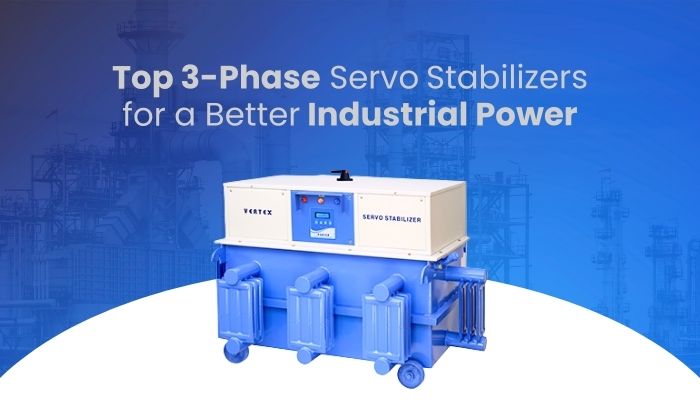
A 50 KVA 3 phase servo voltage stabilizer is specifically engineered to handle the high-load, three-phase power demands typical of large-scale textile manufacturing units. Unlike conventional stabilizers, the servo-controlled mechanism delivers near-instantaneous voltage correction with precision, ensuring your machines always receive the exact voltage they need — nothing more, nothing less. If you’re looking for the best solution to protect your textile plant’s electrical infrastructure, this guide covers everything you need to know.
What Is a Servo Voltage Stabilizer and How Does It Work?
A servo controlled voltage stabilizer is an advanced automatic voltage regulation (AVR) device that uses a motorized variable transformer (variac) driven by a servo motor to correct voltage deviations in real time. The servo motor receives continuous feedback from the control circuit, which monitors the output voltage and instructs the motor to rotate either clockwise or counterclockwise to raise or lower the voltage accordingly.
In a three-phase configuration — as required by most industrial textile units — three such servo mechanisms work in coordination to independently regulate each phase. This makes the servo voltage stabilizer 3 phase exceptionally effective at handling phase imbalances, common in large factory environments. The result is a smooth, continuous output voltage that stays within ±1% of the set value, regardless of how wildly the input supply fluctuates.
Key operating principles include: sensing the input voltage deviation, triggering the servo motor to adjust the variac tap, and delivering a corrected output — all within milliseconds. This speed of correction is what sets servo stabilizers apart from the older relay-based or static types, which can have correction delays of several seconds.
Why the Textile Industry Specifically Needs a 50 KVA 3 Phase Servo Voltage Stabilizer
The textile manufacturing environment is uniquely challenging from an electrical standpoint. Machines like air-jet looms, rapier weaving machines, ring-spinning frames, and texturizing units all have variable load profiles with frequent start-stop cycles that create significant voltage dips and surges on the supply line. A standard industrial servo stabilizer rated at 50 KVA is the ideal capacity for mid-to-large textile units, providing sufficient headroom for simultaneous machine startups while maintaining stable output.
- High Motor Loads: Textile machines run on large three-phase induction motors. The 50 KVA capacity ensures there is no stabilizer overloading even during peak demand.
- Sensitive Electronics: Modern looms use microprocessor-based controls and inverter drives that are highly sensitive to voltage variations. The automatic servo stabilizer provides consistent power to these components.
- Uninterrupted Production: Voltage-related stoppages cost the industry lakhs of rupees per hour. A reliable servo stabilizer manufacturer’s product keeps machines running without interruption.
- Protection Against Harmonics: Industrial environments generate harmonic distortions that degrade power quality. Servo stabilizers mitigate these effects, extending machine life.
- Cost of Downtime vs. Investment: The cost of a quality servo stabilizer from a reputed servo stabilizer supplier is recovered within months through reduced maintenance and zero downtime.
Key Technical Specifications to Look for in a 50 KVA 3 Phase Servo Stabilizer
When sourcing from any servo stabilizer manufacturer, understanding the technical specifications is crucial to making an informed purchase. Below are the critical parameters you must verify before finalizing your choice:
Input Voltage Range
The wider the input voltage range, the more versatile the stabilizer. For Indian textile regions where grid voltage can drop to as low as 300V or spike above 470V, look for an input range of 300V–470V (3 phase) or even wider. A quality automatic servo stabilizer will handle this full spectrum without any manual intervention.
Output Voltage Accuracy
The output should be stabilized to ±1% of 415V (three-phase) for textile machinery protection. Some premium servo controlled voltage stabilizer models offer ±0.5% accuracy, which is ideal for highly sensitive computerized textile equipment.
Correction Speed
Look for a correction speed of 30–50V per second or higher. Faster correction means your machines experience minimal transient voltage stress during fluctuations — a critical factor in high-speed weaving and spinning applications.
Efficiency Rating
Top-grade industrial servo stabilizers operate at 98–99% efficiency, meaning minimal energy loss. Over the lifetime of the unit running 24×7, this translates to significant electricity savings, reducing your total cost of ownership.
Protection Features
The best servo stabilizer units include over-voltage protection, under-voltage cutoff, single-phase prevention, overload protection, and short-circuit protection. These safeguards automatically disconnect the load if the incoming supply goes beyond safe limits, preventing machinery damage.
| Parameter | Standard Grade | Industrial Grade | Premium Grade | Vertex Power |
|---|---|---|---|---|
| Input Voltage Range | 340–460V | 320–470V | 300–480V | 280–480V |
| Output Accuracy | ±3% | ±2% | ±1% | ±1% |
| Correction Speed | 10–15 V/sec | 20–30 V/sec | 30–50 V/sec | 50+ V/sec |
| Efficiency | 95% | 97% | 98% | 99% |
| Cooling Type | Air Cooled | Air Cooled | Air/Oil Cooled | Air/Oil Cooled |
| Waveform Distortion | High | Medium | Low | Nil |
| Protection Features | Basic | Standard | Advanced | Comprehensive |
| Warranty | 1 Year | 2 Years | 3 Years | 3+ Years |
| Load Suitability | Light Industrial | Medium Industrial | Heavy Industrial | Textile / Heavy Ind. |
How to Choose the Right Servo Stabilizer Supplier for Your Textile Unit
Selecting the right servo stabilizer supplier is as important as the technical specifications themselves. The market is flooded with manufacturers offering varied quality levels, and making the wrong choice can result in frequent breakdowns, poor after-sales support, and ultimately, greater production losses than the stabilizer was meant to prevent.
Here are the key factors to evaluate when choosing a supplier:
- Manufacturing Experience: Prefer a servo stabilizer manufacturer with at least a decade of proven track record in industrial applications, particularly in the textile sector.
- Customization Capability: Textile plants vary widely. A capable supplier should offer customized input/output voltage ranges, enclosure types (indoor/outdoor), and mounting configurations.
- After-Sales Service Network: Check if the supplier has service centers or field engineers accessible in your region for quick maintenance response.
- Certifications: Ensure the products comply with IS, IEC, or CE standards. Certified products guarantee consistent manufacturing quality.
- Client References: Ask for references from textile industry clients specifically. A best servo stabilizer supplier will have a portfolio of large-scale textile deployments.
Installation and Maintenance Best Practices for 50 KVA Industrial Servo Stabilizers
Even the best servo stabilizer will underperform if not installed and maintained correctly. Proper setup ensures you get the full rated performance and longevity from your investment. Here are the industry-recommended practices for textile plant installations:
Installation Guidelines
The stabilizer should be installed as close to the main distribution board as possible to minimize transmission losses. Ensure the location is well-ventilated (or has forced air cooling for oil-cooled types), free from moisture, and protected from direct vibration. For textile mills with dusty environments common in spinning sections enclosed IP54 or higher-rated cabinets are strongly recommended.
Proper earthing is non-negotiable. A dedicated earth pit with resistance below 5 ohms ensures the protection circuits function reliably. Input and output cable sizing must match the stabilizer’s rated current; undersized cables are a common cause of overheating and performance degradation.
Preventive Maintenance Schedule
A well-maintained automatic servo stabilizer can last 15–20 years. The maintenance schedule should include: monthly inspection of servo motor carbon brushes and cleaning of variac carbon dust, quarterly checking of all electrical connections for tightness and signs of oxidation, bi-annual testing of all protection relays and cutoff mechanisms, and annual transformer oil testing (for oil-cooled variants) to verify insulation health.
Partnering with your servo stabilizer manufacturer for an annual maintenance contract (AMC) is a cost-effective way to ensure expert servicing and access to genuine spare parts.
Top Features That Make Vertex Power the Best Choice for Textile Industry Servo Stabilizers
Among the leading names in voltage regulation equipment, Vertex Power stands out as a trusted servo stabilizer manufacturer and supplier in India. Designed with the demanding requirements of the textile industry in mind, their 50 KVA 3 phase servo voltage stabilizer models incorporate a combination of advanced engineering and practical user benefits.
What sets them apart includes:
- Ultra-Wide Input Range: Handles extreme voltage scenarios from 280V to 480V (three-phase) far beyond what standard units accommodate.
- Zero Waveform Distortion: Pure sinusoidal output protects VFDs, servo drives, and PLC systems integral to modern textile automation.
- Intelligent Control Panel: Digital microcontroller-based control for precise voltage sensing and faster correction response compared to analog controllers.
- Modular Design: Easier on-site maintenance with plug-in servo motor assemblies and replaceable visitors, reducing servicing downtime.
- Industry-Specific Customization: Special models available for dyeing and bleaching sections with higher moisture ingress protection ratings.
Conclusion
Investing in the right servo voltage stabilizer is one of the smartest decisions a textile manufacturer in India can make. Voltage instability is not a minor inconvenience, it is a persistent threat to machine longevity, fabric quality, and worker safety. A properly selected and installed 50 KVA 3 phase industrial servo stabilizer eliminates this threat comprehensively, paying for itself many times over through reduced maintenance costs, extended machine life, and uninterrupted production output.
Whether you’re setting up a new textile unit or upgrading your existing power protection infrastructure, choosing a reputed servo stabilizer manufacturer with textile-specific expertise, robust after-sales support, and certified products is the foundation of a smart power management strategy. The automatic servo stabilizer from Vertex Power represents the convergence of engineering excellence and practical industrial reliability making it the definitive choice for India’s textile sector.
For personalized consultation, technical specifications, and the best pricing on servo voltage stabilizer 3 phase solutions for your textile plant, reach out to the expert team at Vertex Power today.
FAQ
1: What capacity servo stabilizer is suitable for a medium-sized textile unit?
A 50 KVA servo voltage stabilizer is typically suitable for medium-sized textile units with a connected load of 35–45 KW across three phases. Always calculate the total connected load and add a 20–25% safety buffer when selecting stabilizer capacity.
2: What is the difference between a servo stabilizer and a static stabilizer?
A servo controlled voltage stabilizer uses a motorized variac for smooth, continuous voltage correction with near-zero waveform distortion. A static stabilizer uses semiconductor switches (thyristors) for faster but step-based correction, which can introduce minor waveform distortions making servo types preferred for sensitive textile machinery.
3: Can a single 50 KVA stabilizer protect an entire textile production line?
Yes, a single industrial servo stabilizer of 50 KVA capacity can protect an entire production line if the total connected load falls within its rated capacity. For larger plants, multiple units can be deployed in a distributed architecture for zone-wise protection.
4: How long does a servo stabilizer typically last?
With proper installation and regular preventive maintenance, a quality automatic servo stabilizer from a reputed manufacturer has an operational lifespan of 15–20 years. The servo motor brushes and carbon contacts are wear components that require periodic replacement every 3–5 years.
5: Is a servo stabilizer suitable for both spinning and weaving sections?
Absolutely. The servo voltage stabilizer 3 phase configuration is equally effective for both spinning and weaving sections. Its ability to independently regulate each phase makes it particularly effective for environments where motor loads on different phases can be asymmetric.
6: What certifications should I look for in an industrial servo stabilizer?
Look for BIS (Bureau of Indian Standards) certification conforming to IS 9815, IEC 61558, or CE marking for export-grade products. These certifications from a reputed servo stabilizer manufacturer ensure the product meets quality, safety, and performance benchmarks.
7: Does a servo stabilizer help reduce electricity bills?
Yes. By maintaining the voltage at optimal levels, a best servo stabilizer prevents motors from drawing excessive current during voltage sag conditions which is a significant cause of inflated electricity consumption. Many textile plants report 5–12% reduction in energy bills after stabilizer installation.
8: How is a 3 phase servo stabilizer different from a single phase unit?
A three-phase servo stabilizer regulates all three phases of the supply independently and simultaneously, making it essential for industrial machinery that runs on three-phase power. Single-phase units are only suitable for domestic or light commercial applications. For textile industry use, the servo voltage stabilizer 3 phase is the correct choice in all cases.
9: What is the installation time for a 50 KVA servo stabilizer?
A skilled team from a competent servo stabilizer supplier can typically complete the installation of a 50 KVA unit in 4–8 hours, including cabling, earthing, and commissioning tests. Complex installations with bypass arrangements or parallel configurations may take longer.
10: How do I contact Vertex Power for a servo stabilizer quote?
You can reach Vertex Power one of India’s leading servo stabilizer manufacturers and suppliers directly through their official website at vertexpower.co.in for product inquiries, customization requests, technical consultation, and competitive pricing tailored to your textile unit’s specific requirements.