
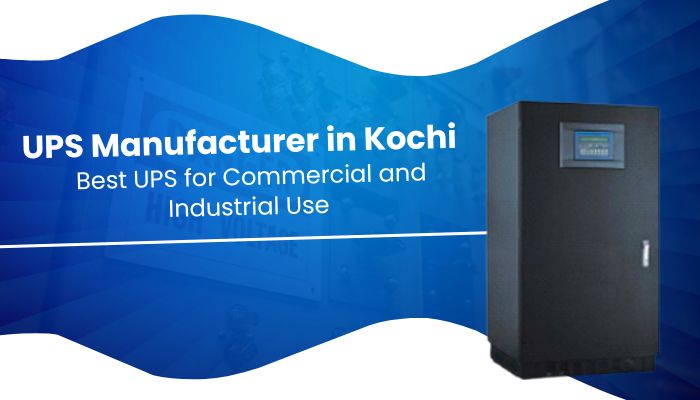
A quality UPS manufacturer in Kochi designs systems that not only provide backup power but also condition the power supply to protect equipment from various electrical anomalies. Modern UPS systems come with advanced features like automatic voltage regulation, frequency stabilization, and surge protection, making them indispensable for businesses that cannot afford even momentary power disruptions.
Industrial Applications Requiring Robust UPS Solutions
Industrial facilities have even more stringent power requirements than commercial establishments. Manufacturing plants, processing units, pharmaceutical facilities, and chemical plants often have processes that cannot be interrupted without causing significant production losses or safety hazards. A specialized UPS manufacturer in Kochi understands these unique requirements and can provide industrial-grade solutions.
Industrial UPS systems are designed to handle higher loads, withstand harsh environmental conditions, and provide extended backup times. They protect sensitive automation equipment, programmable logic controllers (PLCs), variable frequency drives (VFDs), and other critical machinery from power quality issues that could lead to production downtime, equipment failure, or compromised product quality.
Types of UPS Systems Available for Different Applications
Online UPS Systems – Maximum Protection for Critical Loads
Online UPS systems, also known as double-conversion UPS, provide the highest level of power protection. In this configuration, the incoming AC power is continuously converted to DC power to charge the batteries, and then converted back to clean AC power to supply the connected load. This means the connected equipment always runs on battery-derived power, providing complete isolation from power quality problems.
A reputable UPS manufacturer in Kochi recommends online UPS systems for applications where even the slightest power disturbance could cause significant problems. These include data centers, medical equipment, telecommunications infrastructure, and precision manufacturing equipment. The zero transfer time during power failures makes online UPS the preferred choice for mission-critical applications.
Offline UPS Systems – Cost-Effective Solution for Basic Protection
Offline UPS systems, also called standby UPS, represent the most basic and economical form of power protection. Under normal conditions, the connected equipment runs directly on utility power. When a power failure occurs, the UPS quickly switches to battery power through an inverter. This switching process typically takes a few milliseconds.
While consulting with a UPS manufacturer in Kochi, businesses with less critical applications such as individual workstations, small office equipment, or home offices might find offline UPS systems sufficient for their needs. These systems offer basic surge protection and battery backup at an affordable price point, making them ideal for budget-conscious applications where brief transfer times are acceptable.
Key Factors to Consider When Choosing a UPS Manufacturer
Quality Standards and Certifications
Quality should never be compromised when it comes to power protection equipment. A credible UPS manufacturer in Kochi adheres to international quality standards and possesses relevant certifications. Look for manufacturers whose products comply with standards such as IEC 62040, CE marking, ISO certifications, and other industry-specific requirements.
Quality manufacturing ensures longer equipment life, better reliability, safer operation, and consistent performance under varying conditions. Premium components, rigorous testing procedures, and quality control measures distinguish professional manufacturers from suppliers of substandard equipment. Always verify certifications and quality credentials before making purchasing decisions.
After-Sales Service and Support
Even the most reliable UPS system requires periodic maintenance, and occasional issues may arise that need professional attention. The quality of after-sales service often determines the overall value of your investment. A responsible UPS manufacturer in Kochi provides comprehensive support including installation assistance, commissioning, user training, preventive maintenance, and responsive repair services.
Industrial UPS Solutions – Powering Manufacturing Excellence
Protecting Automated Manufacturing Processes
Modern manufacturing relies heavily on automation systems that demand clean, consistent power. Programmable logic controllers, human-machine interfaces, servo drives, and industrial computers form the nervous system of automated production lines. Any power disturbance can cause these systems to malfunction, leading to production stoppages, scrap generation, or equipment damage.
Partnering with a specialized UPS manufacturer in Kochi ensures that manufacturing facilities receive UPS solutions designed specifically for industrial environments. These systems feature ruggedized construction to withstand temperature variations, dust, vibrations, and other harsh conditions typical of manufacturing floors. They provide stable, conditioned power that keeps automation equipment running smoothly.
Three-Phase UPS for High-Power Industrial Applications
Large industrial facilities typically operate on three-phase power systems and require UPS solutions that can handle substantial loads ranging from tens to hundreds of kilowatts. Three-phase UPS systems distribute power more evenly and efficiently than single-phase systems, making them ideal for industrial applications.
A competent UPS manufacturer in Kochi offers three-phase UPS configurations in various topologies including online, line-interactive, and modular designs. These systems can be configured in parallel for redundancy or to increase capacity. Modular designs allow for scalability, enabling businesses to start with their current requirements and expand as their power needs grow.
UPS for Process Industries
Process industries such as chemical plants, pharmaceutical manufacturing, food processing, and oil refineries have continuous operations that cannot tolerate power interruptions. In many cases, an unexpected shutdown can result in spoiled batches, contaminated products, safety hazards, or expensive restart procedures.
When selecting a UPS manufacturer in Kochi for process industry applications, look for manufacturers who understand the critical nature of these operations. The UPS systems should provide sufficient backup time to safely complete current batches or execute controlled shutdown procedures. Integration with distributed control systems (DCS) and supervisory control and data acquisition (SCADA) systems ensures coordinated response during power events.
Commercial UPS Applications – Ensuring Business Continuity
Data Centers and IT Infrastructure
Data centers represent perhaps the most demanding application for UPS systems. Server downtime translates directly into business losses, productivity reduction, and potential data corruption. Modern data centers require not just backup power but also precise voltage regulation, harmonic filtering, and ultra-reliable operation.
A specialized UPS manufacturer in Kochi can design data center UPS solutions with redundancy configurations such as N+1, 2N, or distributed redundant systems that ensure maximum availability. These configurations provide backup UPS capacity so that even if one unit fails, the critical IT equipment remains protected. Advanced monitoring and management software allows IT administrators to track UPS performance and receive alerts about potential issues.
Healthcare Facilities and Medical Equipment
Hospitals, clinics, diagnostic centers, and other healthcare facilities deal with life-critical equipment that absolutely cannot experience power disruptions. Medical imaging equipment, life support systems, laboratory analyzers, and patient monitoring devices require clean, stable power at all times.
Medical-grade UPS systems from a reputable UPS manufacturer in Kochi meet stringent electrical safety standards and provide the reliability demanded by healthcare applications. These systems often incorporate medical isolation transformers, meet specific leakage current requirements, and provide detailed event logging for compliance purposes. Extended battery backup times ensure that critical medical procedures can be completed even during prolonged outages.
Banking and Financial Services
Banks, ATM networks, financial institutions, and payment processing centers handle sensitive financial transactions that require continuous availability. Transaction failures due to power problems can result in financial discrepancies, customer dissatisfaction, and regulatory compliance issues.
By working with a trusted UPS manufacturer in Kochi, financial institutions can implement comprehensive power protection strategies. UPS systems protect core banking servers, networking equipment, ATMs, point-of-sale terminals, and communication infrastructure. Proper backup power ensures that transactions complete successfully and that no data is lost during power disturbances.
Retail and Hospitality Sector
Shopping malls, retail stores, hotels, and restaurants increasingly rely on electronic systems for operations. Point-of-sale systems, inventory management, security systems, reservation systems, and digital signage all require reliable power. Power outages disrupt customer service, create security vulnerabilities, and result in lost revenue.
A knowledgeable UPS manufacturer in Kochi can recommend appropriately sized UPS systems for retail and hospitality applications. These solutions protect critical systems while providing sufficient backup time to complete transactions, secure premises, and inform customers about the situation. Integration with lighting and emergency systems ensures coordinated response during power events.
Comparison of UPS Technologies for Different Applications
Feature | Online UPS | Line-Interactive UPS | Offline UPS |
Power Protection Level | Highest – Complete isolation | Medium – Good voltage regulation | Basic – Simple backup |
Transfer Time | Zero (continuous power) | 2-4 milliseconds | 5-10 milliseconds |
Efficiency | 85-95% | 95-98% | 95-99% |
Voltage Regulation | Excellent | Good with AVR | None (direct power) |
Typical Capacity Range | 1 kVA – 800 kVA | 500 VA – 5 kVA | 300 VA – 2 kVA |
Best Applications | Data centers, medical equipment, industrial automation | Small servers, network equipment, workstations | Individual computers, home offices |
Cost | Highest | Medium | Lowest |
Maintenance Requirements | Regular professional service | Periodic inspection | Minimal maintenance |
Battery Life | 3-5 years | 3-5 years | 2-4 years |
Noise Level | Moderate (cooling fans) | Low | Very low |
Energy Efficiency and Green UPS Technologies
Reducing Operational Costs Through Efficient UPS Design
Energy efficiency has become a critical consideration in UPS selection, as these systems operate continuously and can significantly impact electricity costs. Modern UPS technologies have made substantial improvements in efficiency, with some systems achieving 96-99% efficiency in normal operation.
A forward-thinking UPS manufacturer in Kochi incorporates energy-efficient designs that minimize power losses. Features such as eco-mode operation, high-efficiency transformers, advanced inverter designs, and intelligent cooling systems reduce energy consumption without compromising protection. Over the lifespan of a UPS system, these efficiency gains translate into substantial cost savings.
Lithium-Ion Battery Technology
Traditional valve-regulated lead-acid (VRLA) batteries have served the UPS industry well, but lithium-ion battery technology is revolutionizing backup power systems. Lithium-ion batteries offer longer service life (8-10 years compared to 3-5 years for VRLA), smaller footprint, faster charging, wider operating temperature range, and reduced maintenance requirements.
Progressive manufacturers and a quality UPS manufacturer in Kochi now offer lithium-ion battery options for UPS systems. While the initial investment is higher, the total cost of ownership over the system’s lifetime is often lower due to reduced replacement frequency, lower cooling costs, and decreased maintenance expenses. For facilities with space constraints or difficult battery replacement logistics, lithium-ion technology provides significant advantages.
Environmental Considerations and Sustainability
Businesses are increasingly conscious of their environmental footprint, and UPS systems play a role in sustainability efforts. Energy-efficient UPS systems reduce carbon emissions associated with electricity generation. Proper battery recycling programs ensure that hazardous materials are handled responsibly at end-of-life.
An environmentally responsible UPS manufacturer in Kochi implements sustainable manufacturing practices, uses recyclable materials where possible, provides battery recycling programs, and designs products for longevity rather than planned obsolescence. Green certifications and compliance with environmental regulations demonstrate a manufacturer’s commitment to sustainability.
UPS Installation, Maintenance, and Best Practices
Installation Requirements and Best Practices
Proper installation is essential for reliable UPS operation. This includes adequate space for equipment and ventilation, appropriate electrical connections with proper grounding, suitable ambient temperature and humidity levels, protection from dust and contaminants, and accessibility for maintenance activities.
Working with an experienced UPS manufacturer in Kochi ensures professional installation following manufacturer specifications and electrical codes. The installation process should include proper cable sizing, circuit breaker selection, bypass switch configuration, battery installation, system commissioning, and comprehensive testing. Documentation of installation parameters and configurations aids future maintenance and troubleshooting.
Preventive Maintenance Programs
Regular preventive maintenance extends UPS lifespan, ensures reliable operation, and identifies potential issues before they cause failures. Maintenance activities include battery testing and replacement, capacitor inspection, cooling system cleaning, electrical connection inspection, firmware updates, and comprehensive performance testing.
A responsible UPS manufacturer in Kochi offers structured maintenance programs tailored to different UPS types and applications. Maintenance schedules typically include quarterly inspections, semi-annual detailed testing, and annual comprehensive service. Detailed service reports document system condition and provide recommendations for any corrective actions. Investing in preventive maintenance significantly reduces the risk of unexpected failures and extends equipment life.
Remote Monitoring and Predictive Maintenance
Advanced UPS systems incorporate intelligent monitoring capabilities that provide real-time visibility into system performance. Network management cards, SNMP integration, cloud-based monitoring platforms, and mobile applications allow administrators to track UPS status from anywhere.
Modern solutions from a technology-forward UPS manufacturer in Kochi include predictive analytics that identify trends indicating potential issues. Battery impedance trending, temperature monitoring, load profiling, and event history analysis enable proactive maintenance interventions before failures occur. Integration with building management systems and IT infrastructure management platforms provides centralized monitoring of facility power systems.
Selecting the Right UPS Capacity for Your Business
Understanding Power Requirements and Load Calculations
Accurate load calculation forms the foundation of proper UPS sizing. Begin by creating an inventory of all equipment requiring protection, including computers, servers, networking equipment, telecommunications gear, security systems, lighting, and any other critical devices. Each device’s power consumption can typically be found on its nameplate or in technical specifications.
Consulting with a knowledgeable UPS manufacturer in Kochi helps navigate the complexities of power calculations. It’s important to distinguish between volt-amperes (VA) and watts, understand power factor considerations, account for inrush currents during equipment startup, and include appropriate safety margins. Professional load assessment tools and power monitoring equipment provide accurate data for sizing decisions.
Determining Required Backup Time
Backup time requirements vary significantly depending on the application. Some facilities need only enough time to save work and shut down equipment gracefully (5-15 minutes), while others require extended runtime to operate through typical utility outages or until backup generators start and stabilize (30 minutes to several hours).
A practical UPS manufacturer in Kochi helps businesses analyze their specific backup time needs based on factors such as criticality of operations, availability of backup generators, typical duration of power outages in the area, cost considerations, and physical space for battery cabinets. Extended backup times require larger battery banks, which impact both cost and space requirements.
Planning for Growth and Expansion
Businesses evolve, and power requirements typically increase over time as new equipment is added. Installing a UPS system with some reserve capacity or choosing a scalable architecture prevents the need for premature replacement when requirements grow.
Forward-thinking businesses work with a UPS manufacturer in Kochi to implement scalable solutions. Modular UPS designs allow capacity expansion by adding modules rather than replacing the entire system. Oversizing the UPS within reasonable limits (typically 20-30% above current requirements) provides expansion headroom. Planning electrical infrastructure with growth in mind ensures that power distribution, cooling capacity, and physical space can accommodate future needs.
Understanding Total Cost of Ownership for UPS Systems
Initial Investment Considerations
The purchase price of a UPS system represents only a portion of the total cost of ownership. Initial costs include the UPS unit itself, battery cabinets and batteries, installation services, electrical modifications, dedicated cooling if required, and monitoring systems or accessories.
A transparent UPS manufacturer in Kochi provides detailed quotations that break down all cost components. While it might be tempting to choose the lowest-priced option, this approach often leads to higher long-term costs due to reduced reliability, lower efficiency, shorter service life, or inadequate support. Balancing initial investment with long-term value delivers the best outcome.
Ongoing Operational Expenses
UPS systems consume electricity during normal operation, with efficiency levels directly impacting energy costs. A 100 kVA UPS system operating at 90% efficiency wastes approximately 10 kW continuously, resulting in significant electricity costs over years of operation. Higher efficiency systems cost less to operate despite potentially higher purchase prices.
Working with an efficiency-focused UPS manufacturer in Kochi helps minimize operational expenses. Additional ongoing costs include battery replacements (typically every 3-5 years for VRLA batteries), preventive maintenance, facility cooling costs, and potential service calls for repairs. Energy-efficient designs with longer battery life reduce these recurring expenses.
Cost of Downtime and Risk Mitigation
Perhaps the most significant cost consideration is the potential impact of power-related downtime. For commercial and industrial facilities, even brief outages can result in lost revenue, productivity losses, data corruption, equipment damage, spoiled inventory, safety incidents, and reputation damage.
Investing in quality power protection from a reliable UPS manufacturer in Kochi represents insurance against these costly scenarios. Calculating the true cost of downtime—including direct losses, recovery expenses, and indirect impacts—often reveals that even premium UPS solutions deliver excellent return on investment through avoided downtime costs. Risk mitigation value should be factored into purchasing decisions alongside direct costs.
Latest Trends and Innovations in UPS Technology
Modular and Scalable UPS Architectures
Traditional UPS systems are monolithic units with fixed capacity. Modular UPS designs revolutionize power protection by using multiple independent power modules housed in a common chassis. This architecture provides scalability (add modules as requirements grow), redundancy (N+1 or greater configurations), improved reliability (failure of one module doesn’t compromise the system), and easier maintenance (hot-swappable modules reduce downtime).
Innovative manufacturers and a progressive UPS manufacturer in Kochi offer modular solutions across various capacity ranges. These systems allow businesses to start with the capacity they need today and expand seamlessly as requirements increase, avoiding oversized systems operating at poor efficiency while eliminating premature replacement when growth occurs.
IoT Integration and Smart UPS Management
The Internet of Things (IoT) is transforming UPS systems into intelligent devices that communicate, analyze, and optimize autonomously. Smart UPS systems feature cloud connectivity, predictive analytics, remote diagnostics, automated reporting, mobile applications, and integration with IT infrastructure management platforms.
A technology-leading UPS manufacturer in Kochi incorporates IoT capabilities that provide unprecedented visibility and control. Facility managers receive real-time alerts about system status, track energy consumption patterns, schedule maintenance based on actual component condition rather than fixed intervals, and troubleshoot issues remotely. Machine learning algorithms analyze operating data to predict failures before they occur, enabling proactive interventions.
Grid-Interactive and Energy Storage Systems
Beyond traditional backup power, advanced UPS systems are evolving into grid-interactive energy management platforms. These systems can provide services such as peak shaving (reducing demand charges by supplementing utility power during high-cost periods), load leveling, renewable energy integration, demand response participation, and even selling power back to the grid where regulations permit.
Forward-thinking businesses exploring these possibilities benefit from consulting with an innovative UPS manufacturer in Kochi who understands emerging applications. While regulatory and technical considerations vary by location, grid-interactive capabilities transform UPS systems from passive backup devices into active energy management assets that contribute to operational efficiency and sustainability goals.
Conclusion
A quality UPS manufacturer in Kochi brings together technical expertise, proven products, professional services, and ongoing support to deliver complete power protection solutions. From initial assessment through installation, commissioning, and long-term maintenance, the right manufacturing partner becomes a valued collaborator in ensuring business continuity.
Don’t wait for a costly power event to reveal vulnerabilities in your power infrastructure. Proactive investment in quality UPS systems from a trusted UPS manufacturer in Kochi provides peace of mind and ensures that your business operations continue smoothly regardless of utility power conditions. Contact qualified manufacturers today to discuss your specific requirements and discover how modern UPS technology can protect your critical systems and support your business objectives.
Frequently Asked Questions
1. What capacity UPS do I need for my business?
UPS capacity depends on the total power consumption of equipment you want to protect plus a safety margin. Calculate the total wattage or VA rating of all connected devices, add 20-30% for safety margin and future expansion, and consider required backup time. A professional UPS manufacturer in Kochi can conduct a detailed load assessment to determine the optimal capacity for your specific application. Commercial establishments typically need systems ranging from 3 kVA to 20 kVA, while industrial facilities may require 20 kVA to several hundred kVA depending on their operations.
2. How long do UPS batteries typically last before replacement?
Standard valve-regulated lead-acid (VRLA) batteries in UPS systems typically last 3-5 years under normal operating conditions. Factors affecting battery life include operating temperature (higher temperatures shorten life), charge-discharge cycles, maintenance quality, and battery quality. Lithium-ion batteries offer significantly longer life, typically 8-10 years. Working with a reputable UPS manufacturer in Kochi ensures you receive quality batteries and proper maintenance guidance. Regular battery testing helps identify when replacement is needed before battery failure causes system unavailability.
3. What is the difference between kVA and kW ratings in UPS systems?
kVA (kilovolt-amperes) represents apparent power, while kW (kilowatts) represents real power that actually performs work. The relationship between them depends on power factor, which varies based on the type of load. Modern IT equipment typically has power factors between 0.9-1.0, meaning a 10 kVA UPS can support approximately 9-10 kW of load. Understanding this distinction is important for proper sizing. Consult with a knowledgeable UPS manufacturer in Kochi to ensure your UPS is rated appropriately for both kVA and kW requirements of your specific equipment.
4. Can a UPS protect against voltage fluctuations and surges?
Yes, quality UPS systems provide comprehensive protection against various power quality issues including voltage fluctuations, surges, sags, spikes, and harmonic distortion. Online UPS systems offer the highest level of protection by completely isolating connected equipment from utility power. Line-interactive systems include automatic voltage regulation that corrects voltage variations without switching to battery. Even offline systems provide basic surge suppression. Choosing the right UPS type from a trusted UPS manufacturer in Kochi ensures your sensitive equipment receives appropriate protection for your power quality conditions.
5. How often does a UPS system require maintenance?
Preventive maintenance schedules vary by UPS type, capacity, and operating environment. Generally, UPS systems benefit from quarterly visual inspections, semi-annual testing, and annual comprehensive service including battery testing, capacitor inspection, cooling system cleaning, and firmware updates. Critical applications may require more frequent attention. Smaller systems with less critical applications might need only annual service. A professional UPS manufacturer in Kochi provides maintenance schedules specific to your equipment and application. Regular maintenance significantly extends equipment life and ensures reliable operation when power protection is needed.
6. What backup runtime should I plan for with my UPS system?
Required backup runtime depends on your specific situation. For facilities with backup generators, 10-15 minutes may suffice to start the generator and transfer loads. Operations without generators typically need 30-60 minutes or more to complete critical processes and shut down equipment safely. Extended runtime applications might require several hours. Longer backup times require larger battery banks, impacting cost and space. Discuss your specific requirements with a UPS manufacturer in Kochi to determine the optimal balance between backup time, cost, and available space.
7. Can I add more equipment to my existing UPS system?
This depends on the current load level and available capacity. UPS systems should not be loaded beyond 80% of rated capacity for optimal performance and reliability. If your current UPS has available capacity, additional equipment can be connected. If you’re approaching maximum capacity, options include upgrading to a larger UPS, adding a second UPS for new equipment, or implementing a modular system that allows capacity expansion. An experienced UPS manufacturer in Kochi can assess your current system and recommend the best approach for accommodating growth.
8. What environmental conditions affect UPS performance?
UPS systems operate best in controlled environments with temperatures between 20-25°C, humidity between 20-80%, and clean air free from dust and corrosive contaminants. High temperatures significantly reduce battery life and may cause thermal shutdowns. Dust accumulation can block cooling airflow and cause overheating. Excessive humidity promotes corrosion. Industrial installations in harsh environments require UPS systems with appropriate environmental ratings. Consult with a UPS manufacturer in Kochi familiar with your operating conditions to select equipment suitable for your specific environment.
9. Are modular UPS systems better than traditional designs?
Modular UPS systems offer several advantages including scalability (add capacity as needed), improved reliability through redundancy, reduced maintenance downtime with hot-swappable modules, and potentially lower initial investment if you start small. Traditional monolithic designs may have lower cost at higher capacities and simpler architecture. The best choice depends on your specific requirements, growth expectations, and budget. A knowledgeable UPS manufacturer in Kochi can compare both approaches for your application and recommend the architecture that delivers optimal value for your situation.
10. How do I know if my UPS system needs battery replacement?
Warning signs include reduced backup runtime, battery warning indicators on the UPS, physical signs like swelling or leakage, and frequent battery test failures. Modern UPS systems with monitoring capabilities track battery health through impedance testing and provide advance warning of degradation. Rather than waiting for failure, schedule regular battery testing as part of preventive maintenance. A professional UPS manufacturer in Kochi offers battery testing services that accurately assess condition and recommend replacement timing. Proactive battery replacement prevents unexpected system failures and maintains reliable protection.