
Introduction
Power quality is a real problem across India. Voltage fluctuations, sudden dips, and surges happen every day in factories, hospitals, commercial buildings, and manufacturing plants. These fluctuations can damage expensive equipment and interrupt production. That is why most industrial units today depend on a servo voltage stabilizer to keep their machines and systems running without any trouble.
India’s industrial growth has pushed the demand for reliable power solutions. From small workshops to large manufacturing units, every business needs a steady power supply. A quality servo voltage stabilizer in India does exactly that — it monitors incoming voltage and automatically corrects it to a safe output level, protecting all connected equipment.
In this post, we will explain why industries across India prefer servo stabilizers, what makes them different from other solutions, and how to choose the right one for your needs.
What is a Servo Voltage Stabilizer and How Does it Work?
A servo voltage stabilizer is an automatic voltage correction device. It uses a servo motor to adjust a variable transformer (variac) based on the incoming supply voltage. When the input voltage goes up or down, the servo motor turns the variac to bring the output back to the correct level.
The process is simple and very effective. A sensing circuit continuously measures the input voltage. If the voltage deviates from the set value, the control circuit activates the servo motor. The motor adjusts the variac, and the output voltage is corrected within seconds. This entire process is automatic and continuous.
This makes a servo voltage stabilizer ideal for industries where voltage variations are frequent and unpredictable. The technology is proven, widely used, and trusted by thousands of industries across India.
Key Components of a Servo Stabilizer
- Servo Motor: Drives the variac for voltage correction
- Variac (Variable Transformer): Adjusts the output voltage smoothly
- Control Circuit: Monitors and signals the servo motor
- Buck-Boost Transformer: Provides fine voltage correction
- Bypass Switch: Allows maintenance without shutting down the load
Why Indian Industries Face Voltage Fluctuation Problems
India has a large and growing power grid, but distribution is still uneven in many regions. Industrial zones, especially in Tier-2 and Tier-3 cities, often face frequent voltage fluctuations. There are several reasons for this:
- Overloaded distribution transformers in industrial zones
- Long transmission lines causing voltage drops
- Sudden switching of heavy loads in nearby factories
- Poor grid infrastructure in semi-urban and rural areas
- Seasonal demand surges during summer months
These fluctuations can be damaging. CNC machines, motors, compressors, IT systems, and medical equipment are all sensitive to voltage variations. A trusted servo stabilizer manufacturer understands these challenges and designs equipment that handles wide input ranges while delivering a clean, stable output.
This is why having a proper servo voltage stabilizer installed is not a luxury for Indian industries — it is a necessity.
Benefits of Using a Servo Voltage Stabilizer in Industrial Applications
Industries across sectors have adopted servo stabilizers because of the many clear benefits they offer. Here is a look at why so many plant managers and engineers choose them:
1. Wide Input Voltage Range
A good servo voltage stabilizer in India can handle input voltages ranging from as low as 170V to as high as 270V (for single phase) and similar wide ranges for three-phase systems. This wide correction range makes it suitable for areas with severe voltage fluctuations.
2. High Accuracy Output
Modern stabilizers offer output accuracy of ±1% or better. This level of precision is important for sensitive equipment like CNC machines, medical instruments, and data servers.
3. Suitable for Heavy Industrial Loads
A 3 phase servo stabilizer is built specifically for heavy-duty industrial use. It can handle large loads — from a few KVA to several MVA — making it the go-to solution for factories with multiple machines running at the same time.
4. Long Life and Low Maintenance
Servo stabilizers are built to last. With proper periodic maintenance (mainly brush replacement in the servo motor), these units can run reliably for many years. Top servo voltage stabilizer suppliers provide good after-sales support to keep units in top condition.
5. Cost-Effective Protection
Compared to the cost of repairing or replacing damaged industrial equipment, a servo stabilizer is a very cost-effective investment. It pays for itself by preventing damage and downtime.
| Feature | Servo Voltage Stabilizer |
Static Stabilizer | Step Down Transformer |
|---|---|---|---|
| Voltage Correction | Excellent (Wide Range) | Good (Moderate Range) | Fixed Ratio Only |
| Response Time | Fast (Motor-Driven) | Very Fast (Electronic) | Not Applicable |
| Suitable for Heavy Load | Yes | Yes | Limited |
| 3 Phase Available | Yes | Yes | Yes |
| Cost | Moderate | Higher | Lower |
| Maintenance | Periodic (Brushes) | Minimal | Low |
| Best For | Industries, Hospitals, CNC | IT, Telecom, Data Centers | Voltage Step-Down Only |
As the table shows, a servo stabilizer is the most versatile solution for industries. A static stabilizer is better for IT or telecom environments where speed matters most. A step down transformer is used when you simply need to reduce voltage from one level to another, not for voltage regulation. For most Indian industrial applications, the servo stabilizer wins on balance of performance, durability, and cost.
Industries That Rely on Servo Voltage Stabilizers in India
Almost every industry that uses electrical equipment benefits from a servo stabilizer. But some sectors rely on them more than others:
Manufacturing and Automotive
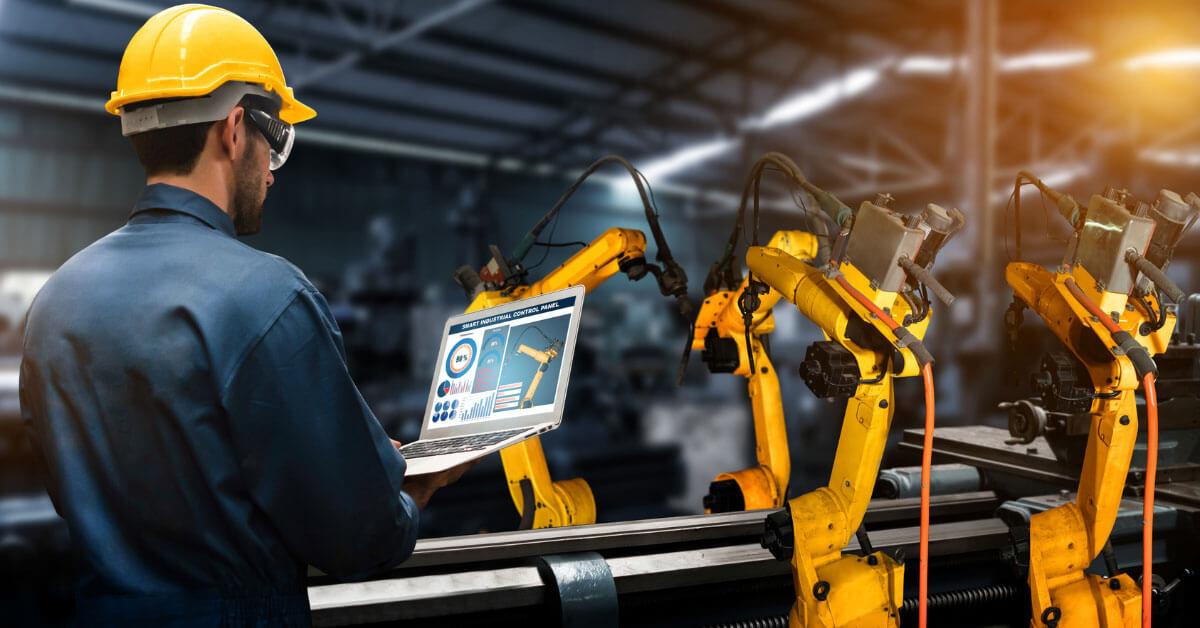
CNC machines, robotic arms, and precision tools need steady voltage. A 3 phase servo stabilizer from a reliable servo stabilizer manufacturer protects this equipment and prevents costly production stops.
Healthcare and Hospitals
Medical equipment like MRI machines, CT scanners, and ICU monitors cannot tolerate any voltage fluctuation. Hospitals across India install servo voltage stabilizers in India to ensure patient safety and equipment longevity.
Textiles and Printing
Textile mills and printing presses use high-speed machines that are sensitive to voltage changes. A servo stabilizer ensures consistent output quality and prevents fabric defects or print errors caused by power dips.
IT and Data Centers
While a static stabilizer is often chosen for data centers, many IT companies also use servo stabilizers for building-level protection. Reliable servo voltage stabilizer suppliers offer solutions tailored to IT facility requirements.
Food Processing and Cold Storage
Compressors and refrigeration systems in food processing plants require stable voltage. Fluctuations can affect cooling efficiency and spoil products. A servo stabilizer keeps these systems running at optimal levels.
How to Choose the Right Servo Voltage Stabilizer for Your Industry
Choosing the right stabilizer depends on several factors. Here is what you should consider before buying:
- Load Capacity: Calculate the total KVA load of all connected equipment and add a 20-25% safety margin
- Input Voltage Range: Check the minimum and maximum voltage levels in your area
- Single Phase or 3 Phase: For heavy industrial loads, always choose a 3 phase servo stabilizer
- Output Accuracy: Look for stabilizers with ±1% or better accuracy
- Protection Features: Overvoltage, under-voltage, overload, and short-circuit protection should be included
- Brand and Support: Always buy from a trusted servo stabilizer manufacturer with a proven track record and good service support in India
If you are unsure about the right specifications, the team at Vertex Power can help you choose the correct servo voltage stabilizer for your application. They are experienced servo voltage stabilizer suppliers with a wide product range and deep knowledge of Indian industrial requirements.
Conclusion
India’s industrial sector is growing fast, and so is the need for stable, reliable power. Voltage fluctuations are a daily reality for factories, hospitals, and commercial establishments across the country. A servo voltage stabilizer in India is the most trusted and widely used solution to tackle this problem.
Whether you need a 3 phase servo stabilizer for a large manufacturing unit or a smaller unit for a commercial building, there are options available for every need. Compared to a static stabilizer or a step down transformer, the servo stabilizer offers the best combination of wide voltage correction range, accuracy, and durability for most Indian industrial conditions.
Vertex Power is a reputed servo stabilizer manufacturer and servo voltage stabilizer supplier in India, offering high-quality products for industries of all sizes. Their expert team can guide you through the selection process and ensure you get the right solution for your power protection needs.
FAQ
1. What is the main purpose of a servo voltage stabilizer?
The main purpose is to automatically correct voltage fluctuations and provide a stable, accurate output voltage to connected equipment. It protects machines and appliances from damage caused by high or low voltage.
2. How is a servo voltage stabilizer different from a static stabilizer?
A servo stabilizer uses a servo motor and a variac for voltage correction, making it suitable for wide voltage ranges and heavy loads. A static stabilizer uses electronic components and has a faster response time, making it better suited for IT and telecom environments. Both have their advantages depending on the application.
3. What is a 3 phase servo stabilizer used for?
A 3 phase servo stabilizer is used for large industrial loads that are powered by a three-phase supply. It is commonly used in manufacturing plants, textile mills, hospitals, and commercial buildings with heavy equipment.
4. Can I use a step down transformer instead of a servo stabilizer?
A step down transformer only converts voltage from one fixed level to another. It does not correct or regulate voltage variations. If your supply voltage fluctuates, a step down transformer alone will not protect your equipment. A servo stabilizer is a better choice for voltage regulation.
5. How do I select the right KVA rating for my servo stabilizer?
Add up the total wattage or KVA of all equipment connected to the stabilizer. Then add a 20-25% safety margin on top. For example, if your total load is 80 KVA, choose a 100 KVA stabilizer. A qualified servo stabilizer manufacturer can help you calculate the right rating.
6. How often does a servo voltage stabilizer need maintenance?
Servo stabilizers generally need maintenance every 6 to 12 months. The main maintenance task is cleaning and inspecting the servo motor brushes. Carbon brushes wear out over time and need to be replaced. Regular maintenance keeps the unit running efficiently and extends its life.
7. Are servo voltage stabilizers suitable for hospitals?
Yes, servo voltage stabilizers are widely used in hospitals to protect sensitive medical equipment like MRI machines, CT scanners, ventilators, and monitoring systems. They ensure a clean, stable power supply that keeps critical equipment running safely.
8. Where can I find reliable servo voltage stabilizer suppliers in India?
You can find trusted servo voltage stabilizer suppliers like Vertex Power in India. They offer a wide range of products for industrial, commercial, and healthcare applications. You can reach them at ho@vertexpower.co.in for more information.
9. What protection features should a good servo stabilizer have?
A good servo stabilizer should include over-voltage protection, under-voltage cutoff, overload protection, short-circuit protection, and a bypass switch. Some premium models also include time delay relays and digital display panels for easy monitoring.
10. Is a servo voltage stabilizer a good investment for small industries?
Absolutely. Even for small industries, a servo voltage stabilizer is a worthwhile investment. The cost of one voltage surge damaging a machine or halting production is far higher than the cost of the stabilizer itself. It protects your equipment and gives you peace of mind.