
In today’s power-intensive industrial environment, voltage instability is one of the biggest threats to productivity, equipment health, and operational efficiency. Manufacturing plants, processing units, hospitals, data centers, and commercial facilities rely on consistent voltage to keep critical systems running without interruption. This is where a 3 phase servo stabilizer has become the industry standard for reliable and efficient power regulation.
Unlike single-phase or conventional stabilizers, three phase servo stabilizers are engineered to handle high loads, unbalanced conditions, and continuous voltage fluctuations with exceptional accuracy. Their ability to deliver stable output voltage across all three phases makes them indispensable for modern industrial power systems.
Industries today operate with heavy machinery, automated systems, and sensitive electronic equipment that demand precise voltage control. Even minor voltage deviations can result in higher energy consumption, overheating, equipment malfunction, or sudden shutdowns.
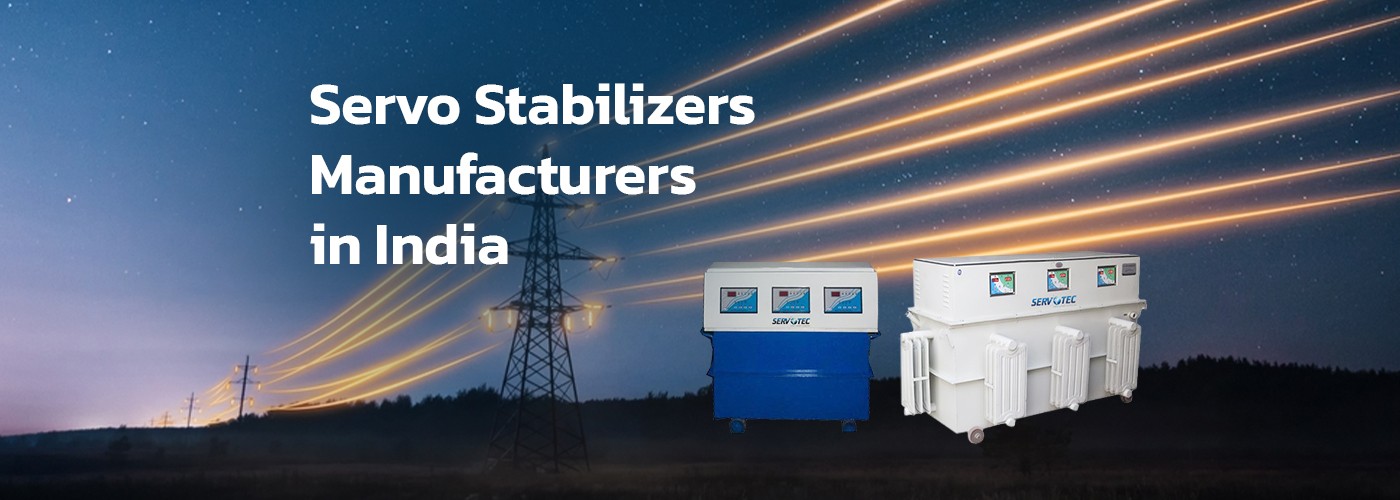
A trusted servo stabilizer manufacturer focuses on designing stabilizers that not only regulate voltage but also improve overall power efficiency. Three phase servo stabilizers are specifically built to support industrial loads where reliability, accuracy, and long-term performance are critical.
Why Three Phase Systems Dominate Industrial Power Infrastructure
Most industrial electrical networks operate on three phase power due to its ability to transmit higher power efficiently and run heavy motors smoothly. As a result, voltage regulation equipment must match this infrastructure.
Leading stabilizer manufacturers in chennai and across India emphasize three phase servo stabilizers because they provide balanced voltage correction across all phases, ensuring uniform performance and protecting costly machinery from voltage imbalance.
What Is a Three Phase Servo Stabilizer?
A three phase servo stabilizer is an automatic voltage control system that continuously monitors input voltage and corrects fluctuations using a servo motor mechanism and a buck-boost transformer. It ensures that the output voltage remains within a tight tolerance, typically ±1 percent, regardless of variations in input supply.
Each phase is independently controlled, allowing precise voltage correction even when loads are uneven—a common condition in industrial environments.
Key Reasons Why Three Phase Servo Stabilizers Are the Industry Standard
1. High Voltage Accuracy
Three phase servo stabilizers deliver superior voltage accuracy compared to conventional stabilizers. This precision ensures that industrial equipment operates at rated voltage, reducing power loss and improving performance.
2. Ability to Handle Heavy Loads
Industrial applications involve motors, compressors, elevators, and machinery with high starting currents. Three phase servo stabilizers are designed to withstand these load variations without voltage drop or performance degradation.
3. Balanced Voltage Across All Phases
Unbalanced voltage is a major cause of motor failure and inefficiency. Three phase servo stabilizers independently regulate each phase, ensuring uniform voltage distribution and improved system stability.
4. Improved Energy Efficiency
Stable voltage reduces excess current draw, lowering energy losses in cables, transformers, and motors. This results in improved power efficiency and reduced electricity costs over time.
5. Extended Equipment Life
Voltage fluctuations cause insulation breakdown, overheating, and component stress. By maintaining stable voltage, three phase servo stabilizers significantly extend the lifespan of industrial equipment.
Power your industrial operations with high-performance three phase servo stabilizers from Vertex Power Solutions.
Industrial Applications That Depend on Three Phase Servo Stabilizers
Three phase servo stabilizers are widely used in:
- Manufacturing and assembly plants
- Textile and garment industries
- Pharmaceutical and chemical industries
- Hospitals and diagnostic centers
- Data centers and IT infrastructure
- Printing and packaging units
- Elevators and lift systems
- Food processing plants
In each of these sectors, power stability directly impacts productivity, safety, and operating costs.
Oil-Cooled vs Air-Cooled Three Phase Servo Stabilizers
Oil-Cooled Stabilizers
Used for higher capacities, oil-cooled stabilizers offer superior heat dissipation and are ideal for continuous heavy-duty industrial applications.
Air-Cooled Stabilizers
Best suited for moderate capacities, air-cooled stabilizers are compact, easy to install, and cost-effective.
Choosing the right cooling method ensures optimal performance and long-term reliability.
Role of Three Phase Servo Stabilizers in Power Quality Management
Three phase servo stabilizers play a vital role in improving overall power quality by:
- Minimizing voltage dips and surges
- Preventing harmonic distortion effects
- Reducing electrical noise
- Supporting power factor correction systems
This comprehensive power conditioning capability makes them a core component of industrial electrical infrastructure.
Cost Efficiency and Return on Investment
Although three phase servo stabilizers involve a higher initial investment compared to basic stabilizers, the long-term benefits far outweigh the cost. Industries experience:
- Lower maintenance expenses
- Reduced equipment replacement costs
- Decreased power wastage
- Fewer production interruptions
The result is a strong return on investment through operational efficiency and reliability.
Integration with Industrial Power Systems
Three phase servo stabilizers are often integrated with:
- Isolation transformers
- Step-down transformers
- Static stabilizers
- Online UPS systems
This layered approach ensures complete protection against voltage instability, power interruptions, and electrical disturbances.
Compliance and Safety Standards
High-quality three phase servo stabilizers are designed to meet industry safety and electrical standards. Features such as overload protection, short-circuit protection, and thermal safeguards ensure safe operation even under extreme conditions.
Future of Three Phase Servo Stabilizers
With increasing automation, electrification, and energy efficiency requirements, the demand for precise voltage regulation will continue to grow. Three phase servo stabilizers will remain the industry standard due to their reliability, scalability, and ability to support evolving industrial power needs.
Power your industrial operations with high-performance three phase servo stabilizers from Vertex Power Solutions.
(FAQs)
1. What is a three-phase servo stabilizer?
It is a voltage regulation system that stabilizes three phase power supply with high accuracy using servo motor control.
2. Why are three-phase servo stabilizers used in industries?
They handle heavy loads, provide precise voltage control, and protect industrial equipment from fluctuations.
3. What voltage accuracy do three-phase servo stabilizers offer?
Typically ±1 percent, which is ideal for sensitive industrial machinery.
4. Can three-phase servo stabilizers handle unbalanced loads?
Yes, each phase is regulated independently to manage unbalanced conditions.
5. Are three-phase servo stabilizers energy efficient?
Yes, they reduce current draw and power losses, improving overall energy efficiency.
6. What is the difference between oil-cooled and air-cooled stabilizers?
Oil-cooled stabilizers are for high capacities, while air-cooled models suit moderate loads.
7. Do three-phase servo stabilizers reduce downtime?
Yes, by preventing voltage-related failures and equipment trips.
8. Can these stabilizers be used with UPS systems?
Yes, they are commonly integrated with online UPS for complete power protection.
9. How long does a three-phase servo stabilizer last?
With proper maintenance, 10 to 15 years or more.
10. What industries benefit most from three-phase servo stabilizers?
Manufacturing, healthcare, IT, textiles, pharmaceuticals, and heavy engineering sectors.