


Introduction
Power interruptions are more than just inconveniences – they translate into lost data, halted production lines, damaged equipment, and significant financial losses. Whether you run a hospital, a manufacturing plant, a data centre, or a small business, uninterrupted power is the backbone of smooth operations. This is where the role of a dependable UPS Manufacturer in India becomes absolutely critical.
Vertex Power, a recognized UPS Manufacturer in India, brings cutting-edge technology and field-proven engineering to deliver power solutions across industries. From modular UPS systems for enterprise data centers to rugged industrial UPS for oil & gas facilities, the product range is designed to meet the exact demands of India’s diverse industrial ecosystem.
Understanding UPS Systems: The Foundation of Reliable Power
A UPS, or Uninterruptible Power Supply, is an electrical device that provides emergency power to connected loads when the main power supply fails or drops below an acceptable level. Unlike a generator, which takes time to start, a UPS provides instantaneous or near-instantaneous protection against power disruptions. It stores energy in batteries or supercapacitors and delivers it seamlessly when required.
How a UPS Works
At its core, a UPS system consists of a rectifier that converts incoming AC power to DC, batteries that store this DC energy, and an inverter that converts stored DC energy back to AC power when needed. Depending on the UPS topology, this process happens in different ways and at different speeds.
The three primary topologies — offline, line-interactive, and online double conversion — each serve different use cases. Understanding these topologies helps businesses select the right solution without over-investing or under-protecting their operations.
Key Components of an Industrial UPS
Every UPS system, regardless of its capacity, contains several critical components: the rectifier/charger, battery bank, inverter, static bypass switch, and the control unit. High-end industrial UPS systems also include transformer isolation, active power factor correction, and intelligent battery management systems that monitor battery health in real time.
Working with a reputable UPS Manufacturer in India ensures that every component meets quality standards and that the system is tested under real-world conditions before deployment. This is not a product category where you want to cut corners.
The global push toward digital transformation has dramatically elevated expectations for power quality. Modern UPS systems now come with advanced remote monitoring, predictive maintenance alerts, cloud-based dashboards, and eco-mode operations that reduce energy consumption while maintaining reliable protection.
Types of UPS Systems and Their Industrial Applications
Selecting the right type of UPS is not a one-size-fits-all decision. Different industries, equipment types, and criticality levels demand different UPS topologies and configurations. Here is a breakdown of the most important UPS types and where they find their best application.
Online Double Conversion UPS
This is the highest tier of UPS protection. In this topology, the load is always powered through the inverter, meaning the incoming AC power is always converted to DC and then back to AC. This ensures zero transfer time during a power failure and provides complete isolation from power quality problems including voltage sags, surges, harmonics, and frequency variations.
Online double conversion UPS systems are ideal for data centers, hospitals, financial institutions, and any facility where even a millisecond of power interruption is unacceptable. As a leading UPS Manufacturer in India, Vertex Power engineers these systems with high-efficiency ratings exceeding 96%, DSP-controlled inverters, and IGBT-based rectifiers for clean, stable power output.
Line Interactive UPS
Line interactive UPS systems are a step above offline units. They include an automatic voltage regulator (AVR) that corrects voltage fluctuations without switching to battery power. This extends battery life significantly, as the batteries are engaged only during complete power failures or severe voltage deviations.
These systems are well-suited for offices, retail outlets, small data rooms, and SMEs that experience frequent voltage swings but not necessarily complete outages. They offer a strong balance between performance and affordability.
Modular UPS Systems
Modular UPS architecture is one of the most significant innovations in power protection in recent years. Instead of a single large UPS unit, modular systems consist of individual power modules that plug into a common frame. Capacity can be scaled by adding more modules without any downtime, making them perfect for growing businesses.
Redundancy is another major advantage. If one module fails, the others continue to power the load, ensuring high availability. Maintenance is also simplified, as failed modules can be hot-swapped without shutting down the system.
Three-Phase Industrial UPS
Heavy industries, large manufacturing plants, and utility facilities require three-phase power backup at capacities ranging from tens to hundreds of kilovolt-amperes. Three-phase UPS systems are designed to handle large, balanced power loads and provide uniform protection across all three phases.
When you partner with a trusted UPS Manufacturer in India like Vertex Power, you get three-phase UPS systems with N+1 redundancy configurations, paralleling capability, and advanced SNMP-enabled monitoring for enterprise-grade visibility.
UPS System Comparison Table: A Quick Reference Guide
The table below provides a consolidated view of different UPS types, their capacity ranges, ideal applications, and standout features to help you make an informed decision.
UPS Type | Capacity Range | Best Application | Key Feature |
Online Double Conversion | 1 kVA – 800 kVA | Data Centers, Hospitals | Zero Transfer Time |
Line Interactive | 500 VA – 20 kVA | SMEs, Offices, Retail | Automatic Voltage Regulation |
Offline / Standby | 300 VA – 5 kVA | Home, Small Offices | Cost-Effective |
Modular UPS | 10 kVA – 1 MVA | Enterprise, Telecom | Scalable & Redundant |
Industrial UPS | 20 kVA – 2 MVA | Manufacturing, Oil & Gas | Rugged Build |
Three-Phase UPS | 10 kVA – 1 MVA | Heavy Machinery, Utilities | Balanced Power Load |
For detailed specifications on any of these UPS categories, visit Vertex Power – UPS Manufacturer in India and explore the full product range tailored to your industry needs.
Key Factors to Consider When Choosing a UPS Manufacturer in India
Choosing a UPS system is only half the equation — choosing the right manufacturer is equally important. The quality of engineering, after-sales support, component sourcing, and customization capability all vary widely across manufacturers. Here are the critical factors to evaluate.
Manufacturing Standards and Certifications
A credible UPS manufacturer should comply with relevant national and international standards. Look for compliance with BIS (Bureau of Indian Standards), IEC 62040 series, and ISO 9001 quality management certification. These certifications are not just badges — they represent a commitment to engineering discipline, consistent quality control, and traceable manufacturing processes.
Products from a certified manufacturer are tested rigorously for performance under load, temperature extremes, battery backup accuracy, efficiency ratings, and electromagnetic compatibility. This testing gives end users confidence that the product will perform as specified in the field.
Customization and Scalability
No two industrial facilities are identical. Power requirements differ based on the type of load, the criticality of operations, the ambient environment, and the growth roadmap of the business. A capable manufacturer should be able to customize UPS solutions to specific requirements rather than forcing customers into off-the-shelf configurations.
Vertex Power, as a leading UPS Manufacturer in India, offers engineered-to-order UPS systems with custom battery autonomy, enclosure ratings (IP54, IP55), input/output voltage configurations, and communication interfaces tailored to each client’s operational environment.
After-Sales Service and AMC Support
A UPS system is a long-term investment. Over its operational life of 10 to 15 years, it will require periodic battery replacements, firmware updates, preventive maintenance, and occasional component replacements. The availability of a strong after-sales service network is therefore a non-negotiable factor when choosing a UPS manufacturer.
Manufacturers that offer Annual Maintenance Contracts (AMCs), emergency response SLAs, remote diagnostics, and genuine spare parts support significantly reduce the total cost of ownership and ensure maximum uptime for the customer.
Energy Efficiency Ratings
Modern UPS systems are expected to be not just reliable but also energy efficient. With rising electricity costs and growing sustainability mandates, UPS efficiency has become a key procurement criterion. Look for UPS systems with efficiency ratings above 94% in normal mode and above 99% in eco-mode operation.
High-efficiency UPS systems reduce heat generation, lower cooling costs, decrease energy bills, and contribute to an organization’s green credentials. This is especially important for large-scale deployments like data centers where thousands of kilowatt-hours are consumed every month.
Industrial Sectors That Rely on Professional UPS Manufacturers
The demand for high-quality power backup spans virtually every sector of India’s economy. Here is a closer look at the industries that have the most critical dependence on reliable UPS systems.
Data Centers and IT Infrastructure
Data centers are perhaps the most obvious consumers of high-capacity UPS systems. Even a brief power interruption can lead to data loss, service outages, hardware damage, and breach of SLA commitments. Modern data centers deploy large online double conversion UPS systems with N+1 or 2N redundancy, often combined with diesel generators for extended backup.
With cloud computing and digital services growing exponentially across India, the demand for data center UPS solutions from a trusted UPS Manufacturer in India has surged dramatically. These systems must support hot-swappable batteries, parallel operation, and intelligent energy management.
Healthcare and Hospitals
In a hospital environment, power failure is literally a matter of life and death. Life support systems, surgical equipment, ICU monitors, imaging machines, and laboratory instruments all require uninterrupted, clean power. Hospital-grade UPS systems must have zero transfer time, very low harmonic distortion, and medical isolation transformers to comply with safety standards for patient environments.
Hospitals also require UPS systems with extended battery runtime to bridge the gap between mains failure and generator startup. Vertex Power designs hospital-specific UPS solutions that meet all relevant electrical safety standards for medical environments.
Manufacturing and Process Industries
On the factory floor, power disruptions can damage work-in-progress, reset PLC controllers, corrupt machine programs, and create dangerous conditions for workers. Industrial UPS systems for manufacturing are built to handle harsh environments — high temperatures, dust, humidity, and vibration — while delivering reliable power to PLCs, SCADA systems, and automation equipment.
Telecom and Network Infrastructure
India’s massive telecom infrastructure, comprising thousands of tower sites, exchange facilities, and network nodes, relies heavily on DC power systems and UPS for operational continuity. Telecom UPS solutions need to be compact, highly reliable, and capable of operating across a wide input voltage range to accommodate poor grid quality in remote areas.
Banking, Finance, and Retail
ATMs, point-of-sale terminals, server rooms, and back-office computing environments in banks and retail outlets are all critical applications for UPS systems. These environments require compact, quiet, reliable UPS units with remote management capabilities and comprehensive protection features.
Advanced Features in Modern UPS Systems
The UPS systems available today are far more sophisticated than the simple battery backup boxes of previous decades. Technological advancements have transformed UPS systems into intelligent power management platforms with a host of advanced features.
IGBT-Based Rectifiers and Inverters
Insulated Gate Bipolar Transistors (IGBTs) are the foundation of modern high-performance UPS systems. They enable faster switching, lower harmonic distortion on the input side, higher efficiency, and more precise voltage and frequency regulation on the output. IGBT-based designs also reduce the size and weight of UPS systems significantly compared to older thyristor-based designs.
Digital Signal Processing (DSP) Control
DSP-based control platforms allow UPS systems to monitor and regulate power parameters in real time with millisecond precision. DSP control enables sophisticated features like adaptive battery charging, dynamic load sharing in parallel configurations, predictive fault detection, and precise power factor correction.
Remote Monitoring and IoT Integration
Modern industrial UPS systems are equipped with SNMP cards, RS-485 interfaces, Modbus connectivity, and often cloud-based monitoring portals. These features allow facilities teams and IT managers to monitor UPS status, battery health, load levels, and alarm conditions from any location in real time.
As a forward-thinking UPS Manufacturer in India, Vertex Power integrates IoT-enabled monitoring solutions into its UPS product range, giving customers complete visibility and control over their power infrastructure.
Lithium-Ion Battery Technology
One of the most exciting developments in UPS technology is the increasing adoption of lithium-ion batteries. Compared to traditional VRLA lead-acid batteries, lithium-ion batteries offer longer cycle life (up to 10 times more cycles), faster recharge capability, significantly lower weight and footprint, wider operating temperature range, and built-in battery management systems.
While the initial investment is higher, the total cost of ownership over the life of a lithium-ion battery-based UPS is often lower due to reduced replacement frequency and lower maintenance costs. This technology is rapidly becoming the standard for premium industrial and data center UPS applications.
Vertex Power: Setting the Standard Among UPS Manufacturers in India
Among the growing number of power backup solution providers in India, Vertex Power has established itself as a benchmark for quality, innovation, and customer focus. With a deep understanding of industrial power challenges and a commitment to engineering excellence, Vertex Power delivers solutions that perform reliably in the most demanding environments.
As a specialized UPS Manufacturer in India, Vertex Power covers the full spectrum of power backup requirements — from compact office UPS systems to large-scale industrial power backup installations for mission-critical facilities.
Product Range and Engineering Capability
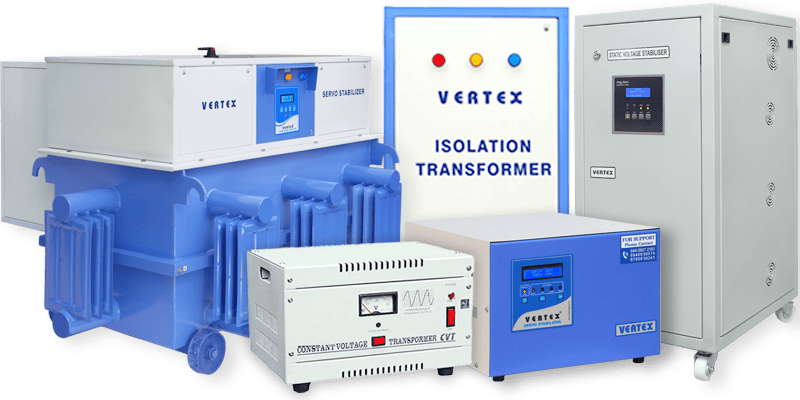
Vertex Power’s product portfolio includes online double conversion UPS (single-phase and three-phase), modular UPS systems, industrial UPS with IP-rated enclosures, servo voltage stabilizers, static voltage stabilizers, and complete power conditioning solutions. Every product is designed and manufactured to meet the highest standards of quality and reliability.
The company invests significantly in R&D to stay ahead of technological advancements, incorporating DSP control platforms, IGBT-based power electronics, advanced battery management, and IoT-ready monitoring interfaces into its product range.
Turnkey Project Capability
Beyond individual products, Vertex Power has the engineering capability to deliver turnkey power backup solutions — from initial load analysis and system design through procurement, installation, commissioning, and ongoing maintenance. This end-to-end capability makes Vertex Power a preferred partner for large industrial projects where integrated power solutions are required.
Geographic Reach and Service Network
With a presence across major industrial hubs in India and a growing network of trained service engineers and authorized partners, Vertex Power ensures that customers receive prompt, professional support wherever they are located. The company’s AMC programs provide scheduled preventive maintenance, emergency response, and genuine spare parts to maximize the operational life of installed systems.
To learn more about how Vertex Power can address your specific power backup challenges, visit vertexpower.co.in and get in touch with the team for a customized consultation.
Installation, Commissioning, and Maintenance Best Practices
Purchasing a high-quality UPS system is only the beginning. Proper installation, commissioning, and ongoing maintenance are equally important to ensure that the system delivers its rated performance over its full operational life.
Site Assessment and Load Analysis
Before specifying a UPS system, a thorough site assessment should be conducted. This includes measuring the actual connected load (not just nameplate ratings), assessing power quality at the site (voltage sags, harmonic distortion, frequency variations), evaluating the ambient environment (temperature, humidity, dust levels), and determining the required battery backup duration.
Under-sizing a UPS is a common mistake that leads to overload shutdowns, reduced battery life, and premature equipment failure. A competent manufacturer will always recommend a system with appropriate headroom for future load growth.
Installation Standards
UPS installation must comply with applicable electrical standards, including proper earthing, appropriate cable sizing, correct upstream protection (MCBs, MCCBs), adequate ventilation for heat dissipation, and clear access for maintenance. In industrial environments, UPS enclosures must have appropriate IP ratings for the ambient conditions.
Preventive Maintenance Schedule
A structured preventive maintenance program is the most cost-effective way to maximize UPS reliability and lifespan. Recommended activities include quarterly inspection and cleaning, semi-annual battery capacity testing, annual load bank testing, regular firmware updates, and replacement of batteries at the end of their design life.
Vertex Power, as a responsible UPS Manufacturer in India, offers structured AMC programs that cover all preventive maintenance activities with documented reports, ensuring compliance with statutory requirements and manufacturer warranties.
Conclusion:
Choosing the right UPS Manufacturer in India is therefore one of the most important infrastructure decisions a business can make. It is not simply about buying a box that keeps power flowing — it is about partnering with an engineering team that understands your operations, designs solutions for your specific challenges, and stands behind those solutions with expert support over the long term.
Vertex Power brings together deep technical expertise, a comprehensive product portfolio, robust manufacturing quality, and a genuine commitment to customer success. Whether you need a compact UPS for a server room, a large modular system for a data center, or a rugged industrial UPS for a manufacturing facility, the team at Vertex Power has the experience and the capability to deliver exactly what you need.
FAQ
1. What is a UPS system and why does my business need one?
A UPS (Uninterruptible Power Supply) is a device that provides instant backup power when the main power supply fails or becomes unstable. Businesses need UPS systems to protect critical equipment, prevent data loss, avoid production disruptions, and maintain operational continuity during power outages or poor power quality conditions.
2. What is the difference between online and offline UPS systems?
An online UPS continuously powers the load through its inverter, providing zero transfer time during outages and complete isolation from power quality issues. An offline UPS switches to battery power only when the main supply fails, with a small transfer time of a few milliseconds. Online UPS provides superior protection and is recommended for critical applications.
3. How do I determine the right UPS capacity for my facility?
The right UPS capacity is determined by calculating the total connected load (in VA or kVA), adding a growth margin of 20 to 30%, selecting the appropriate battery backup duration, and accounting for the power factor of your equipment. A site assessment by an experienced UPS manufacturer is the most reliable way to arrive at the right specification.
4. What is the typical battery life of an industrial UPS?
VRLA lead-acid batteries, which are the most common battery type in industrial UPS systems, typically last between 3 to 5 years under normal operating conditions. Lithium-ion batteries can last 8 to 10 years. Battery life is affected by ambient temperature, depth of discharge cycles, charging quality, and maintenance practices.
5. Can a UPS system be expanded as my power requirements grow?
Yes, modular UPS systems are specifically designed for capacity expansion without downtime. Additional power modules can be added to the existing frame as load requirements grow. Traditional fixed UPS systems are not expandable, which is why modular architecture is increasingly preferred for growing businesses and data centers.
6. What certifications should I look for when selecting a UPS manufacturer?
Look for manufacturers with ISO 9001 quality management certification, BIS certification for Indian market products, and product compliance with IEC 62040 series standards. CE marking and UL listing may also be relevant depending on the application and export requirements.
7. What is the role of an Annual Maintenance Contract for UPS systems?
An AMC ensures that your UPS system receives scheduled preventive maintenance, prompt corrective maintenance when required, battery health monitoring, and genuine spare parts support. AMC programs reduce unplanned downtime, extend system life, and provide documented maintenance records for compliance purposes.
8. Are lithium-ion UPS systems worth the higher initial cost?
For many applications, yes. Lithium-ion batteries offer longer life, faster recharge, lower maintenance requirements, smaller footprint, and broader temperature tolerance compared to lead-acid batteries. The total cost of ownership over the battery’s life is often comparable to or lower than lead-acid alternatives when these advantages are factored in.
9. How does Vertex Power support customers after installation?
Vertex Power, as a dedicated UPS Manufacturer in India, offers comprehensive post-installation support including AMC programs, remote monitoring and diagnostics, emergency breakdown response, genuine spare parts supply, and periodic training for customer maintenance staff.
10. How can I get a customized UPS solution quote from Vertex Power?
You can visit vertexpower.co.in to explore the product range and contact the Vertex Power team directly for a detailed needs assessment and customized quotation. The team will help you identify the right UPS type, capacity, battery configuration, and support package for your specific requirements.