


Introduction
A lift stabilizer is a dedicated voltage regulation unit installed at the electrical supply point of an elevator system. It monitors incoming voltage continuously and corrects any deviations whether high spikes or damaging low dips before they reach the motor, variable frequency drive (VFD), or control logic. Without this protection, even a building with a well-maintained elevator is constantly exposed to the risk of costly breakdowns, premature component failure, and in worst-case scenarios, safety incidents that could trap passengers or fail emergency braking systems.
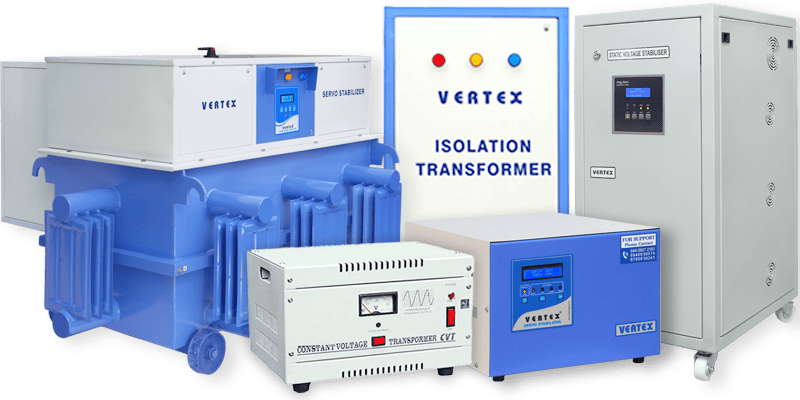
From compact residential units to industrial-grade servo stabilizer for lift installations in high-rise towers and hospitals, the right voltage protection solution exists for every application. This guide explores why voltage stability is critical for lifts, how different stabilizer types compare, and how to choose the right unit for your facility.
Why Voltage Fluctuations Are Especially Dangerous for Elevator Systems
During low-voltage conditions, the motor draws significantly higher current to maintain the torque required to lift or lower the cab and its occupants. This excess current generates heat in the motor windings at a rate proportional to the square of the current meaning even a modest 10% undervoltage can raise winding temperatures by 20% or more during sustained operation. Over time, this degrades the insulation, leading to inter-winding short circuits and eventual motor failure. A well-selected 3 phase stabilizer for lift eliminates this risk by ensuring the motor always receives voltage within its designed operating band.
Overvoltage events, on the other hand, can be even more immediately destructive. A voltage spike that lasts just a few milliseconds can destroy the gate drivers in a VFD, corrupt the lift’s microprocessor-based control system, or blow the input protection circuits in the control panel. These components are expensive to replace and often have long lead times, meaning an overvoltage event can put an elevator out of service. The 3 phase voltage stabilizer for lift available through trusted suppliers corrects these conditions in real time, offering comprehensive protection from both ends of the voltage spectrum.
Types of Lift Stabilizers Choosing the Right Technology for Your Application
Single-Phase Lift Stabilizers
For smaller residential elevators, home lifts, or stairlift systems operating on a single-phase supply, a single-phase lift stabilizer provides adequate protection at a compact form factor and lower cost. These units typically handle loads up to 5 KVA and are suitable where the electrical environment is reasonably stable and the lift motor is modest in size. While effective for their intended application, they are not appropriate for commercial or multi-floor lifts that draw significant three-phase power.
3 Phase Stabilizer for Lift
The vast majority of commercial, industrial, and high-capacity residential elevators operate on a three-phase electrical supply. A 3 phase stabilizer for lift regulates all three phases simultaneously, ensuring balanced voltage across all three conductors, a requirement for three-phase motor health. Phase imbalance, even when individual phase voltages appear within range, causes unequal current distribution in motor windings and can produce vibration, noise, and bearing wear over time. A quality 3 phase stabilizer for lift addresses both voltage magnitude and phase balance, protecting the entire drive train.
Servo Stabilizer for Lift
For the most demanding applications high-rise buildings, hospitals, hotels, and buildings in regions with severe grid instability a servo stabilizer for lift delivers the highest level of protection. Using a servo motor to continuously and smoothly adjust the transformer tap position, this technology provides stepless voltage correction with output accuracy of ±1% or better. Unlike relay-based units that step through fixed voltage levels, the servo stabilizer for lift tracks and corrects voltage in a seamless, continuous manner eliminating even minor fluctuations that relay stabilizers might allow through. For lifts serving critical facilities, this level of precision is the difference between reliable service and recurring technical issues.
Understanding 3 Phase Voltage Stabilizer for Lift Technical Specifications That Matter
When evaluating a 3 phase voltage stabilizer for lift, several technical parameters determine whether the unit is genuinely suitable for elevator protection or merely adequate on paper. Understanding these specifications allows facility managers and electrical engineers to make informed decisions rather than selecting on price alone.
The input voltage range is the first critical parameter it defines the range of incoming grid voltages the stabilizer can accept and correct. For installations in areas with poor grid quality, a wider input range (e.g., 300V–470V line-to-line) provides a larger correction window and reduces the risk of the stabilizer shutting down during deep voltage sags. Correction speed is equally important: a 3 phase voltage stabilizer for lift with a response time under 20 milliseconds ensures that fast transients are corrected before elevator control electronics register them.
Output voltage accuracy, expressed as a percentage deviation from the nominal output, determines how tightly the stabilizer maintains the target voltage. Relay-based units typically achieve ±2–3%, while a servo stabilizer for lift achieves ±1% or better. For VFD-driven elevators, tighter output accuracy directly reduces stress on the drive’s internal capacitors and rectifier circuits, extending their service life considerably. All of these specifications and the complete product range to suit every building type are available for review at .
| Feature / Specification |
Single Phase Lift Stabilizer |
3 Phase Stabilizer for Lift |
Servo Stabilizer for Lift |
Best Fit For |
|---|---|---|---|---|
| Input Voltage Range | 180V–260V | 300V–470V (L-L) | 130V–280V | All building types |
| Capacity Range | 1–5 KVA | 5–50 KVA | 5–100 KVA | Small to large lifts |
| Correction Speed | < 20 ms | < 20 ms | < 10 ms | High-rise & hospitals |
| Correction Technology | Relay | Relay / IGBT | Servo Motor | Precision-critical lifts |
| Ideal Application | Residential lifts | Commercial buildings | Hospitals, Hotels, High-rise |
Capacity Sizing Guide How to Select the Right KVA Rating for Your Lift
Selecting the correct capacity for a lift stabilizer is a process that must account for the lift motor’s rated power, the control panel’s auxiliary loads, lighting within the cab, and the type of drive system in use. An undersized stabilizer will trip repeatedly under the high inrush current that elevator motors draw at startup which can be three to seven times the rated running current while an oversized unit represents unnecessary capital expenditure.
As a general rule, the stabilizer’s KVA rating should be at least 1.5 times the motor’s KW rating to account for power factor, inrush current, and control circuit loads. A 7.5 KW lift motor, for example, demands at minimum a 15 KVA three-phase stabilizer. For a servo stabilizer for lift serving a hospital with multiple lifts, individual units per shaft each appropriately sized are preferable to a single large central unit, as this approach simplifies maintenance and fault isolation.
Buildings in areas with frequent deep voltage sags should opt for stabilizers with a wider input range and a higher correction capacity. The technical team provides application-specific sizing guidance, ensuring that the selected 3 phase stabilizer for lift is neither under-rated nor unnecessarily oversized for the installation.
Installation Requirements and Safety Compliance for Lift Stabilizers
Correct installation of a lift stabilizer is not simply a matter of connecting cables. The unit must be positioned between the building’s dedicated lift distribution board and the elevator control panel, with appropriate cable sizing, protective fusing, and earthing in accordance with national electrical installation standards. Inadequate earthing in particular can cause nuisance tripping, residual current faults, and in extreme cases can compromise the lift’s own safety circuit, earthing a serious regulatory concern.
The physical placement of the stabilizer requires a ventilated, dry, and accessible location typically within the lift machine room. For a 3 phase voltage stabilizer for lift or servo stabilizer for lift, adequate clearance on all sides must be maintained for heat dissipation, and the unit should be mounted on a vibration-isolated surface to prevent mechanical noise transmission to the building structure. All installations should be carried out by a licensed electrician, and the completed installation should be documented and inspected as part of the building’s periodic electrical maintenance records.
Operational Benefits What a Lift Stabilizer Delivers Beyond Basic Protection
The value of a quality lift stabilizer extends well beyond simply preventing breakdowns. In day-to-day operation, stable voltage delivery translates to smoother starts and stops, quieter motor operation, and more consistent floor-levelling accuracy all of which directly affect passenger experience. In buildings where elevator performance is a reflection of overall quality hotels, corporate offices, and healthcare facilities, these operational improvements carry real reputational and commercial value.
From a maintenance perspective, stable voltage dramatically reduces the frequency of VFD faults, encoder errors, and control panel alarms that technicians are called to address. Each avoided service call carries both a direct cost saving and an indirect benefit in the form of reduced elevator downtime. Motor bearing life is also extended when the motor consistently operates at its designed voltage, as the reduction in excess current directly reduces bearing loading from magnetic forces within the motor.
Buildings that have standardised on quality voltage protection particularly servo stabilizer for lift solutions from established suppliers consistently report measurably lower annual maintenance expenditure on their elevator systems. The combination of equipment protection, operational reliability, and extended component life makes the lift stabilizer one of the highest-return electrical infrastructure investments a building can make. Explore the full product range and get expert guidance at .
Conclusion
A quality lift stabilizer, whether a relay-based 3 phase stabilizer for lift for standard commercial applications or a precision servo stabilizer for lift for high-demand environments delivers the stable, accurate voltage that elevator motors, VFDs, and control panels need to perform at their best. The 3 phase voltage stabilizer for lift range available through certified suppliers offers solutions for every building type and budget, backed by technical expertise and after-sales support.
Do not wait for a breakdown to discover the cost of unprotected power. Visit to explore the complete range of certified lift stabilizer and servo stabilizer for lift solutions, and take the first step toward an elevator system that runs safely, reliably, and efficiently for years to come.
FAQ
- What is a lift stabilizer and why is it necessary?
A lift stabilizer is a voltage regulation device installed in an elevator’s electrical circuit to maintain a consistent and safe supply voltage to the lift motor, control panel, and safety systems. Voltage fluctuations from the grid can cause erratic lift behaviour, motor overheating, and premature failure of control components. A lift stabilizer prevents all of these issues by correcting voltage in real time before it reaches any sensitive lift component.
- What is the difference between a single-phase and a 3 phase stabilizer for lift?
A single-phase lift stabilizer regulates voltage on a single conductor and is suitable for small residential elevators or home lifts with relatively low power demands. A 3 phase stabilizer for lift regulates all three conductors of a three-phase supply simultaneously, making it essential for commercial, industrial, and high-capacity elevators where the motor draws significant current and requires balanced three-phase power.
- Why is a servo stabilizer for lift considered the best option for high-rise buildings?
A servo stabilizer for lift uses a servo motor-controlled autotransformer that provides continuous, stepless voltage correction with extremely high precision typically within ±1% of the set output. Unlike relay-based units that switch between fixed taps, servo stabilizers fine-tune voltage constantly, making them ideal for high-rise buildings where power demands are heavy and lift cycles are frequent.
- Can a 3 phase voltage stabilizer for lift handle multiple elevators simultaneously?
Yes, a properly sized 3 phase voltage stabilizer for lift can feed multiple elevator units if the combined KVA demand falls within the stabilizer’s rated capacity with a recommended 25% safety headroom. For large commercial complexes with several lifts running concurrently, it is often advisable to install dedicated stabilizers per lift shaft rather than one central unit to avoid overloading and simplify fault isolation.
- What capacity lift stabilizer do I need for a commercial building?
The capacity depends on the lift motor’s KW rating, the control panel’s electrical demand, lighting, and safety systems. A standard commercial elevator with a 7.5–11 KW motor typically requires a 15–20 KVA three-phase stabilizer. Consult the elevator manufacturer’s specifications and add at least 25% headroom. Detailed capacity guidance is available at .
- How does voltage fluctuation specifically damage a lift motor?
Lift motors are designed to operate within a specific voltage band typically 415V ±10% for three-phase units. When voltage drops below this range, the motor draws more current to maintain torque, causing excessive heat generation and insulation degradation. Voltage spikes above the rated range can puncture winding insulation, destroy control board components, and damage encoder sensors. A quality lift stabilizer prevents both scenarios.
- Is a servo stabilizer for lift more expensive than a relay-based unit?
Yes, servo stabilizers typically carry a higher upfront cost compared to relay-based models due to their precision servo mechanism and broader correction range. However, for lifts in commercial buildings, hospitals, or hotels, the investment is justified by significantly better voltage accuracy, longer equipment life, and fewer breakdowns all of which reduce the total cost of ownership over time.
- What protection features should a quality 3 phase stabilizer for lift include?
A reliable 3 phase stabilizer for lift should include over-voltage protection (OVP), under-voltage protection (UVP), overload cutoff, phase loss protection (PL), over-temperature shutdown (OT), and short circuit protection. High-end models also include phase sequence correction and neutral displacement protection, which are critical for the sensitive variable frequency drives (VFDs) used in modern elevator systems.
- How is a lift stabilizer installed before or after the main panel?
A lift stabilizer is installed after the main electrical panel and before the elevator’s dedicated distribution board or directly at the elevator control panel input. This configuration ensures that only the lift circuit is protected, allowing independent fault isolation without affecting other building systems. Installation should always be performed by a certified electrician following applicable electrical safety standards.
- Where can I source a certified lift stabilizer or servo stabilizer for lift in India?
You can explore a comprehensive range of single-phase and three-phase lift stabilizers, including servo stabilizer for lift and 3 phase voltage stabilizer for lift models, at . Vertex Power offers ISI-compliant, warranty-backed solutions with technical support for residential, commercial, and industrial elevator applications across India.
