

Introduction
Power quality is one of the most critical concerns for any business or industry today. Voltage fluctuations, surges, and sags can damage sensitive equipment, disrupt production, and result in costly downtime. Two of the most widely used solutions in this space are the servo voltage stabilizer and the conventional voltage regulator. While both serve the purpose of maintaining a stable output voltage, they differ significantly in technology, performance, application, and overall value.
Whether you are a plant manager looking for an industrial servo stabilizer or a homeowner searching for basic voltage protection, understanding the key differences between these two devices will help you make an informed decision. This guide breaks down every important aspect so you can choose the right solution for your specific power needs.
What Is a Servo Voltage Stabilizer and How Does It Work?
A servo voltage stabilizer is an advanced automatic voltage correction system that uses a servo motor-driven variac (variable autotransformer) to precisely regulate output voltage. When the input voltage fluctuates, the servo motor adjusts the variac position continuously, compensating for voltage deviations and delivering a constant, clean output to connected equipment.
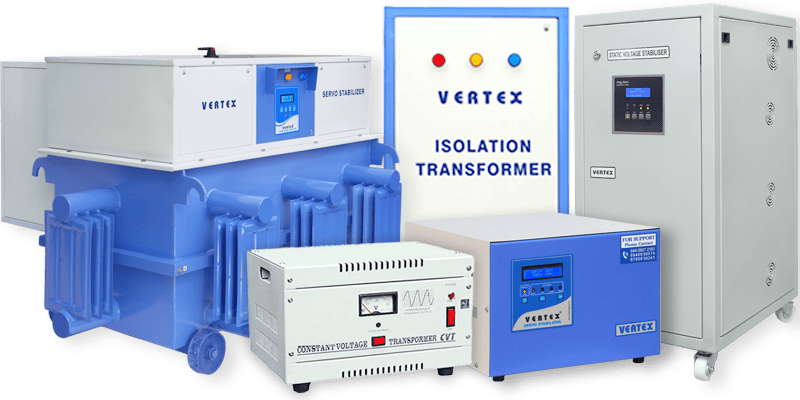
As a trusted servo stabilizer manufacturer, Vertex Power designs these units to handle capacities ranging from 1 KVA for small setups all the way up to 2000 KVA and beyond for large industrial complexes. The servo controlled voltage stabilizer is the preferred choice across manufacturing plants, hospitals, data centers, and commercial buildings because of its precision and reliability.
What Is a Voltage Regulator and How Does It Differ in Technology?
A voltage regulator is a device designed to automatically maintain a constant voltage level regardless of variations in input voltage or load conditions. Voltage regulators come in two broad categories: linear regulators and switching regulators. In the context of power systems, they typically refer to tap-changing transformers or electronic relay-based systems that switch between fixed voltage taps to correct output voltage.
The relay-based voltage regulator operates by sensing the output voltage and switching between different transformer taps using relays. This step-by-step correction means the output voltage jumps in discrete increments rather than providing a smooth, continuous correction. As a result, voltage regulators are suitable for loads that can tolerate small steps in voltage correction but may not be ideal for highly sensitive equipment.
Compared to an automatic servo stabilizer, a traditional voltage regulator has fewer moving parts but also a narrower correction range and lower accuracy. They are typically more suitable for residential applications, small offices, and appliances that do not require precise voltage regulation.
Key Performance Differences: Accuracy, Speed, and Voltage Correction Range
Voltage Correction Accuracy
One of the most significant differences between the best servo stabilizer and a standard voltage regulator is accuracy. A servo stabilizer delivers output accuracy of ±1% or better, which is critical for CNC machines, medical imaging equipment, and precision manufacturing tools.
Correction Speed and Response Time
Servo stabilizers respond to voltage changes within milliseconds, thanks to their continuous motor-driven correction mechanism. Voltage regulators using relay switching may take several cycles to sense and correct the voltage, which can expose sensitive loads to brief but potentially damaging voltage deviations.
Input Voltage Range Handling
A servo voltage stabilizer 3 phase industrial unit can handle input voltage variations as wide as ±50% of the nominal voltage, making it suitable for regions with highly unstable grid supply.
Industrial Applications: Where Servo Stabilizers Outperform Voltage Regulators
When it comes to heavy-duty industrial use, the industrial servo stabilizer stands in a league of its own. Industries that rely on high-precision processes, continuous operations, or sensitive electrical systems cannot afford the limitations of a conventional voltage regulator. Here are the key sectors where servo stabilizers deliver superior results
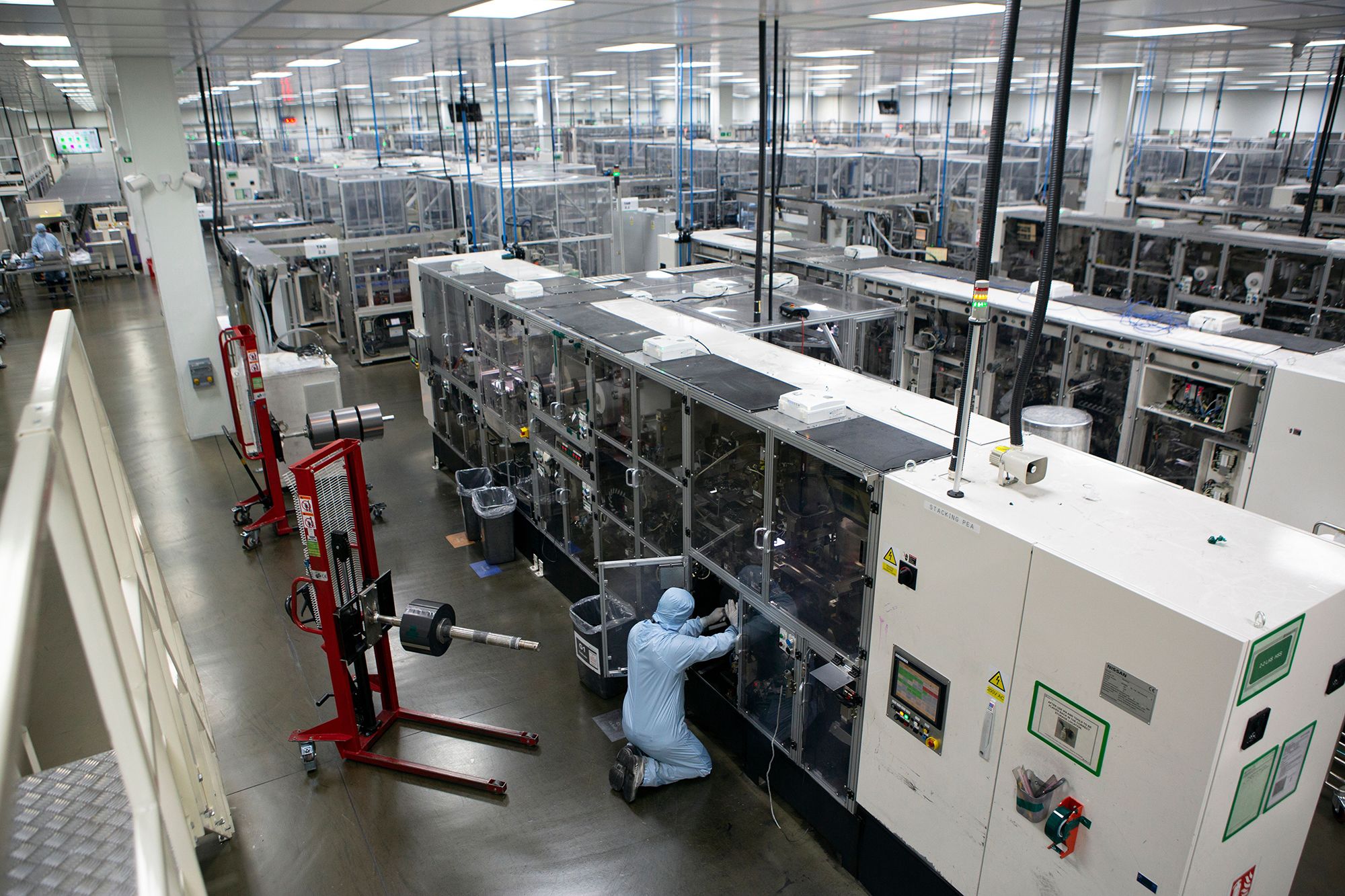
Manufacturing and Production Plants CNC machines, injection molding equipment, and robotic arms require stable voltage to maintain dimensional accuracy and prevent mechanical failures. Any sudden voltage variation can cause production defects or equipment damage.
Hospitals and Healthcare Facilities Life-support systems, diagnostic imaging machines like MRI and CT scanners, and surgical equipment demand uninterrupted, stable power. A servo stabilizer ensures these critical devices receive clean, consistent voltage at all times.
IT and Data Centers Servers, networking equipment, and UPS systems are highly sensitive to power fluctuations. The servo stabilizer protects this equipment from damage and prevents data loss caused by unexpected shutdowns.
Textile Industry, Chemical Plants, and Cold Storage Facilities All these sectors rely on continuous motor loads, where voltage variations directly affect operational efficiency and equipment longevity. A servo stabilizer supplier like Vertex Power provides customized solutions for each of these demanding environments.
Comprehensive Comparison Table: Servo Stabilizer vs Voltage Regulator
| Feature | Servo Voltage Stabilizer | Voltage Regulator |
|---|---|---|
| Working Principle | Servo motor + variac for correction | Transformer / electronic switching |
| Response Time | Fast, milliseconds correction | Moderate, depends on circuit type |
| Phase Configuration | Single phase & 3-phase available | Mostly single phase configurations |
| Capacity Range | 1 KVA to 2000 KVA and beyond | 0.5 KVA to 100 KVA typical |
| Efficiency | 98% to 99% high efficiency | 85% to 95% moderate efficiency |
| Maintenance | Periodic brush & carbon maintenance | Minimal to no maintenance |
| Cost | Higher initial investment | Lower initial cost |
| Best For | Factories, hospitals, data centers | Homes, offices, small appliances |
| Lifespan | 15 to 25 years with proper care | 5 to 10 years average lifespan |
Three-Phase vs Single-Phase: Choosing the Right Configuration
For large-scale industrial applications, the servo voltage stabilizer 3 phase configuration is the standard choice. Three-phase stabilizers provide balanced voltage correction across all three phases simultaneously, ensuring that three-phase motors, heavy machinery, and industrial drives receive equal and stable power. Phase imbalance, which is common in industrial environments, can cause overheating in motors and premature equipment failure problems that a three-phase servo stabilizer eliminates effectively.
Single-phase servo stabilizers are ideal for smaller setups, individual equipment protection, and light commercial use. As a leading servo stabilizer manufacturer, Vertex Power offers both single-phase and three-phase configurations with capacities tailored to specific load requirements. Voltage regulators are predominantly available in single-phase configurations and are less commonly used for large three-phase industrial applications.
Cost Analysis and Long-Term Investment Value
The initial purchase cost of an automatic servo stabilizer is typically higher than that of a conventional voltage regulator. However, when evaluated over the entire lifecycle of the equipment, servo stabilizers offer significantly better return on investment. Their higher efficiency (up to 99%), longer operational lifespan (15 to 25 years), and precise voltage correction translate into lower energy bills, reduced equipment repair costs, and minimized production downtime.
A voltage regulator, while cheaper upfront, may need replacement every 5 to 10 years and offers lower protection for sensitive loads. For any business that depends on uninterrupted, precise power delivery, investing in the best servo stabilizer from a reliable servo stabilizer supplier is a financially sound and operationally wise decision.
Conclusion
Choosing between a servo voltage stabilizer and a conventional voltage regulator ultimately comes down to the nature of your load, the severity of power fluctuations in your area, and your performance expectations. For residential and light commercial applications with mild voltage variations, a voltage regulator can be a cost-effective choice. However, for industrial, commercial, and mission-critical applications that demand precision, wide-range correction, and long-term reliability, the servo controlled voltage stabilizer is the clear and undisputed winner.
Vertex Power, a trusted servo stabilizer manufacturer with years of proven expertise, offers a comprehensive range of servo stabilizers for every application from compact single-phase units to heavy-duty industrial servo stabilizer systems.
FAQ
What is the main difference between a servo stabilizer and a voltage regulator?
A servo voltage stabilizer uses a servo motor and variac for continuous, smooth correction across a wide input range, while a voltage regulator uses relay-based tap switching for stepped correction within a narrower range. Servo stabilizers are far more accurate and suitable for industrial use.
Which is better for industrial use: a servo stabilizer or a voltage regulator?
For industrial applications, the industrial servo stabilizer is always the better choice. It handles wider voltage fluctuations, offers higher accuracy, supports three-phase loads, and provides a significantly longer service life compared to a standard voltage regulator.
What does automatic servo stabilizer mean?
An automatic servo stabilizer refers to a fully automatic voltage correction device that requires no manual intervention. It continuously monitors input voltage and automatically adjusts the output to maintain a stable, preset voltage level through its servo motor-driven mechanism.
Can a servo stabilizer work on three-phase power supply?
Yes, a servo voltage stabilizer 3 phase is specifically designed to regulate all three phases simultaneously. It ensures balanced voltage across all phases, which is essential for protecting three-phase motors, industrial drives, and heavy machinery from phase imbalance and voltage fluctuations.
How do I select the right capacity for a servo stabilizer?
To select the right capacity, calculate the total connected load in KVA and add a 20% to 25% safety margin. Consulting a professional servo stabilizer supplier like Vertex Power ensures you get a unit that is correctly sized for your specific application and future expansion needs.
What maintenance does a servo stabilizer require?
The servo controlled voltage stabilizer requires periodic maintenance including cleaning of carbon brushes, inspection of the variac winding, checking motor brushes for wear, and verifying electrical connections. Regular servicing every 6 to 12 months ensures optimal performance and extends the operational lifespan of the unit.
Is a servo stabilizer suitable for home use?
While servo stabilizers are primarily designed for industrial and commercial use, smaller single-phase units from a reliable servo stabilizer manufacturer can also be used at home if the input voltage fluctuations in your area are severe. For mild fluctuations, a conventional voltage regulator may suffice for residential purposes.
What efficiency can I expect from the best servo stabilizer?
The best servo stabilizer units typically achieve energy efficiency levels of 98% to 99%, making them one of the most efficient voltage correction solutions available. This high efficiency directly translates to lower energy bills and reduced heat generation within the unit.
What is the lifespan of a servo stabilizer compared to a voltage regulator?
A well-maintained automatic servo stabilizer can last between 15 to 25 years, significantly longer than a conventional voltage regulator which typically lasts 5 to 10 years. This extended lifespan makes the servo stabilizer a more cost-effective long-term investment for businesses and industrial facilities.
Where can I find a reliable servo stabilizer supplier in India?
Vertex Power is a leading servo stabilizer supplier and manufacturer in India, offering a complete range of servo stabilizers for industrial, commercial, and specialized applications.