


Introduction
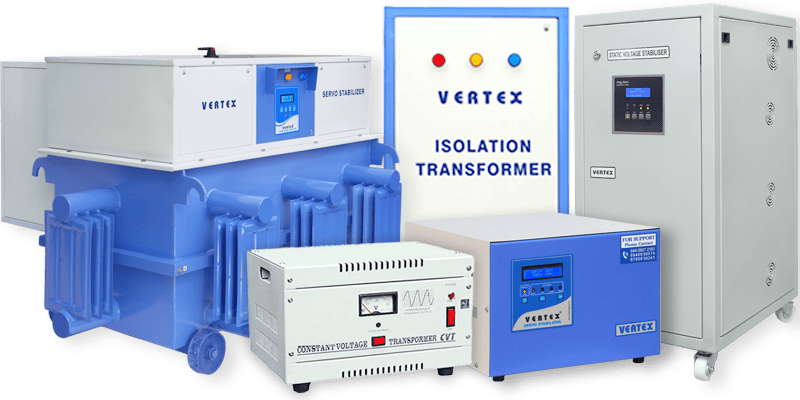
If your lights flicker every time the refrigerator kicks on, or your air conditioner hums and stutters during severe voltage swings, you already know the frustration of unstable power. When protecting expensive electronic equipment, appliances, or heavy industrial machinery, buyers often face a critical dilemma: Oil-Cooled vs. Air-Cooled Stabilizer. Which one actually protects your setup better? The short answer is that it depends heavily on your load size and operating environment. Industry leaders like Vertex Power Solutions engineer both variants to tackle specific power conditions, ensuring that whether you are safeguarding a residential home or a heavy industrial floor, your equipment remains shielded from electrical hazards.
Understanding Core Cooling Technologies
Every voltage stabilizer performs the same fundamental task: it senses fluctuating input voltage and corrects it to a safe, steady output. However, the internal components—such as transformers, copper coils, and control relays—generate significant heat during operation. How a stabilizer manages this thermal buildup determines its lifespan, efficiency, and reliability under heavy loads.
- Air-Cooled Stabilizers: These units rely on natural airflow or fan-assisted ventilation to dissipate heat directly from their internal windings. They represent the standard choice for homes, small offices, and single-appliance setups like refrigerators, televisions, and individual air conditioners.
- Oil-Cooled (Servo) Stabilizers: These units submerge their core transformer components inside a specialized insulating oil bath. Oil absorbs thermal energy far more efficiently than air while simultaneously acting as a robust dielectric insulator. This advanced cooling design makes oil-cooled options essential for heavy-duty, continuous commercial and industrial environments.
Why Load Capacity Dictates the Winner
The line between choosing an air-cooled or oil-cooled system largely comes down to your total connected power load, measured in KVA.
- Light to Medium Loads (Up to 10 KVA): Air-cooled stabilizers comfortably manage loads ranging from a few hundred VA up to 10 KVA. For standard household appliances, individual AC units, or small office setups, air cooling handles thermal output without requiring complex fluid containment.
- Heavy Industrial Loads (10 KVA and Beyond): When scaling up to heavy machinery, CNC equipment, medical imaging tools, or entire commercial buildings, the heat generated inside an air-cooled unit quickly outpaces what ambient air can dissipate. In these heavy-duty scenarios, oil-cooled systems excel. The surrounding oil prevents thermal throttling and structural wear during continuous, round-the-clock operations.
Oil-Cooled Stabilizer vs. Air-Cooled Stabilizer
Comparison at a Glance
| Parameter | Air-Cooled Stabilizer | Oil-Cooled Stabilizer |
| Cooling Medium | Natural or fan-assisted airflow | Insulating dielectric oil bath |
| Ideal Load Range | Up to 10 KVA | 10 KVA to several hundred KVA |
| Primary Applications | Homes, small shops, individual appliances | Factories, CNC machines, commercial complexes |
| Maintenance Level | Minimal to none (dry-type) | Periodic oil level checks and periodic replacement |
| Upfront Cost | More economical | Higher initial investment |
| Footprint & Weight | Compact and lightweight | Bulky, heavier construction needing floor space |
| Average Lifespan | 8 to 10 years | 12 to 15+ years with proper upkeep |
Maintenance, Longevity, and Long-Term Value
One major differentiator often overlooked by buyers is long-term maintenance. Air-cooled units are virtually “plug-and-forget”—they operate dry and need no fluid monitoring.
Conversely, oil-cooled stabilizers require occasional check-ups to monitor oil levels and quality, much like a power transformer. However, when properly maintained, oil-cooled systems routinely outlast dry-type alternatives. The oil bath shields internal copper windings from dust, humidity, and atmospheric oxidation, ensuring exceptional durability under harsh environmental conditions.
Final Verdict
There is no single “winner” in the oil-cooled vs. air-cooled debate—only the right tool for the job. If your power needs are residential or light commercial, an air-cooled stabilizer offers the ultimate blend of economy and convenience. If you operate heavy machinery or manage a massive commercial load profile, investing in an oil-cooled stabilizer guarantees superior electrical safety, structural resilience, and long-term asset protection. Always match your KVA rating accurately with a safe buffer margin, verify your region’s voltage correction window, and source your equipment from trusted power conditioning experts.
FAQ
- Can an air-cooled stabilizer be used for heavy industrial machinery?
Generally, no. Loads exceeding 10 KVA generate too much internal heat for air ventilation alone to manage, leading to frequent thermal trips. Heavy machinery requires robust oil-cooled or heavy-duty servo configurations.
- Is oil-cooled stabilizer maintenance difficult?
It is straightforward. It primarily involves checking oil levels periodically and swapping out the insulating oil every few years, which is a minor task compared to replacing fried factory equipment.
- Do oil-cooled stabilizers require special installation space?
Yes. Because of their heavy-duty oil tanks and robust physical framing, they require dedicated, well-ventilated floor space rather than wall mounting or small shelves.
- Can I upgrade from an air-cooled to an oil-cooled system later?
Yes. Many growing businesses start with air-cooled variants for smaller office loads and transition to high-capacity oil-cooled solutions as their power requirements expand.