


Introduction
Walk into any manufacturing unit dealing with unstable grid supply, and you’ll likely find one piece of equipment quietly doing the heavy lifting behind the scenes — the 3-phase servo stabilizer. If your production line has ever tripped due to voltage sag, or your CNC machines have thrown errors during peak load hours, you already understand why voltage regulation isn’t optional in industrial setups. It’s survival. This guide breaks down everything you need to know about 3-phase servo stabilizers, how they work, why they matter, and how to choose the right one for your factory floor.

Why Industrial Equipment Can’t Survive on Raw Grid Power Alone
India’s power grid, like many developing electrical networks, isn’t known for consistency. Voltage fluctuations of ±20% or more are common, especially in industrial clusters where multiple heavy machines draw power simultaneously. Motors, transformers, and PLC-based systems are engineered to run within a narrow voltage tolerance band — typically 380V to 415V for three-phase systems. Anything outside that range doesn’t just reduce efficiency; it actively damages windings, insulation, and control circuits.
This is where a servo stabilizer earns its keep. Unlike basic voltage stabilizers that use static relays, a servo-controlled unit uses a motorized buck-boost transformer mechanism to continuously correct voltage in real time. The result is smoother output, faster correction speed, and far better protection for sensitive industrial loads.
How a 3 Phase Servo Stabilizer Actually Works
At its core, a 3-phase servo stabilizer relies on a servo motor connected to a variac (variable autotransformer) that adjusts the turns ratio dynamically based on incoming voltage. A microcontroller-based sensing circuit continuously monitors input voltage across all three phases and sends correction signals to the servo motor. This motor physically moves a carbon brush across the variac coil, buck-boosting the voltage until the output stabilizes within the desired range — usually 415V ±1%.
What makes servo technology superior to relay-based or static stabilizers is correction accuracy. While relay stabilizers jump between fixed voltage steps, servo systems offer stepless, linear correction. This matters enormously for applications like injection molding machines, CNC lathes, and textile spinning units, where even minor voltage inconsistency can throw off product quality or damage servo drives.
Single Phase vs Three Phase Correction: Why It Matters
A lot of industrial buyers ask whether they need balanced or unbalanced correction capability. Balanced correction assumes all three phases receive the same voltage adjustment, while unbalanced (independent phase) correction adjusts each phase separately based on its own reading. For facilities running mixed loads — where one phase might be overloaded due to uneven single-phase equipment distribution — independent phase correction is non-negotiable. Choosing the wrong configuration is one of the most common mistakes buyers make, and it’s something any reputable servo stabilizer manufacturer should walk you through before finalizing your order.
Key Specifications to Check Before You Buy
Capacity sizing is where most procurement teams stumble. A stabilizer rated in kVA needs to account not just for running load but also for inrush current during motor startups, which can spike 3–6 times the rated current momentarily. Undersizing leads to premature failure; oversizing wastes capital and floor space.
Beyond capacity, pay attention to correction speed (measured in volts per second), response time, and the type of control card used — analog control cards are being phased out in favor of microprocessor-based digital control cards, which offer better diagnostics, memory logging, and fault protection. Also check for features like overload protection, short-circuit protection, low/high voltage cutoff, and surge protection, since these directly affect equipment longevity.
Reputation matters just as much as specifications on paper. Working with an established servo stabilizer manufacturer that has field-tested experience across industries — textiles, pharmaceuticals, plastics, printing — gives you access to application-specific engineering rather than a one-size-fits-all product. Ask for case studies, load test reports, and after-sales service commitments before signing a purchase order.
Why Industrial Equipment Can’t Survive on Raw Grid Power Alone
India’s power grid, like many developing electrical networks, isn’t known for consistency. Voltage fluctuations of ±20% or more are common, especially in industrial clusters where multiple heavy machines draw power simultaneously. Motors, transformers, and PLC-based systems are engineered to run within a narrow voltage tolerance band — typically 380V to 415V for three-phase systems. Anything outside that range doesn’t just reduce efficiency; it actively damages windings, insulation, and control circuits.
This is where a servo stabilizer earns its keep. Unlike basic voltage stabilizers that use static relays, a servo-controlled unit uses a motorized buck-boost transformer mechanism to continuously correct voltage in real time. The result is smoother output, faster correction speed, and far better protection for sensitive industrial loads.
How a 3 Phase Servo Stabilizer Actually Works
At its core, a 3-phase servo stabilizer relies on a servo motor connected to a variac (variable autotransformer) that adjusts the turns ratio dynamically based on incoming voltage. A microcontroller-based sensing circuit continuously monitors input voltage across all three phases and sends correction signals to the servo motor. This motor physically moves a carbon brush across the variac coil, buck-boosting the voltage until the output stabilizes within the desired range — usually 415V ±1%.
What makes servo technology superior to relay-based or static stabilizers is correction accuracy. While relay stabilizers jump between fixed voltage steps, servo systems offer stepless, linear correction. This matters enormously for applications like injection molding machines, CNC lathes, and textile spinning units, where even minor voltage inconsistency can throw off product quality or damage servo drives.
Single Phase vs Three Phase Correction: Why It Matters
A lot of industrial buyers ask whether they need balanced or unbalanced correction capability. Balanced correction assumes all three phases receive the same voltage adjustment, while unbalanced (independent phase) correction adjusts each phase separately based on its own reading. For facilities running mixed loads — where one phase might be overloaded due to uneven single-phase equipment distribution — independent phase correction is non-negotiable. Choosing the wrong configuration is one of the most common mistakes buyers make, and it’s something any reputable servo stabilizer manufacturer should walk you through before finalizing your order.
Key Specifications to Check Before You Buy
Capacity sizing is where most procurement teams stumble. A stabilizer rated in kVA needs to account not just for running load but also for inrush current during motor startups, which can spike 3–6 times the rated current momentarily. Undersizing leads to premature failure; oversizing wastes capital and floor space.
Beyond capacity, pay attention to correction speed (measured in volts per second), response time, and the type of control card used — analog control cards are being phased out in favor of microprocessor-based digital control cards, which offer better diagnostics, memory logging, and fault protection. Also check for features like overload protection, short-circuit protection, low/high voltage cutoff, and surge protection, since these directly affect equipment longevity.
Reputation matters just as much as specifications on paper. Working with an established servo stabilizer manufacturer that has field-tested experience across industries — textiles, pharmaceuticals, plastics, printing — gives you access to application-specific engineering rather than a one-size-fits-all product. Ask for case studies, load test reports, and after-sales service commitments before signing a purchase order.
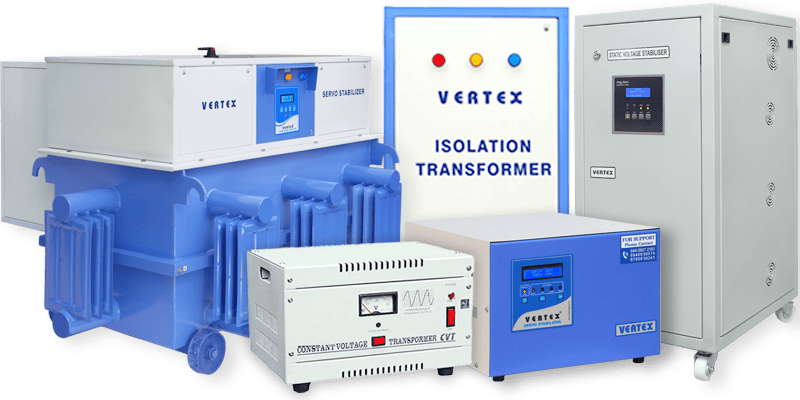
Difference Between Servo Stabilizer, Relay Stabilizer, and Isolation Transformer
| Parameter | Servo Stabilizer | Relay Stabilizer | Isolation Transformer |
| Correction Type | Stepless, continuous | Step-based (fixed increments) | No voltage correction |
| Correction Speed | Slower (1–3V/sec) but precise | Fast but jerky | Not applicable |
| Accuracy | ±1% | ±3–5% | N/A |
| Best For | Heavy industrial loads, motors | Light commercial loads | Noise isolation, safety |
| Maintenance | Moderate (brush wear) | Low | Minimal |
| Cost | Higher initial investment | Lower | Moderate |
Real-World Applications Across Industries
In the textile sector, spinning and weaving machines are extremely voltage-sensitive; even a brief dip can cause thread breakage and production downtime that costs lakhs in lost output. Pharmaceutical manufacturing units rely on servo stabilizers to protect cleanroom HVAC systems and sterilization equipment where voltage consistency directly impacts compliance with GMP standards. Plastic injection molding plants use them to protect servo-driven hydraulic pumps, where voltage instability translates directly into inconsistent product dimensions.
Data centers and hospitals, while not traditionally “industrial,” also deploy 3-phase servo stabilizers upstream of their UPS systems to reduce battery cycling caused by fluctuating mains input, extending UPS battery life significantly.
Maintenance Practices That Extend Stabilizer Life
Servo stabilizers are mechanical-electrical hybrids, which means they need periodic upkeep unlike purely static devices. Carbon brush wear is the most common failure point — brushes should be inspected every six months and replaced when worn beyond manufacturer tolerance. Cooling fans and ventilation louvers need regular cleaning to prevent overheating, especially in dusty factory environments. Loose terminal connections, often overlooked, are a leading cause of localized heating and fire risk, so torque checks during routine maintenance are essential.
Many facilities now opt for AMC (Annual Maintenance Contracts) with their supplier, which typically includes brush replacement, oil-cooled unit servicing (for higher-capacity models), and firmware updates for the control card. This proactive approach costs a fraction of what unplanned downtime would.
Choosing the Right Manufacturer for Long-Term Reliability
Price shouldn’t be your only filter when shortlisting a servo stabilizer manufacturer. Look for ISO certification, in-house testing facilities, and transparent documentation of load testing under simulated fault conditions. Ask specifically about warranty terms — a manufacturer confident in build quality typically offers at least 12–24 months of comprehensive warranty along with accessible spare parts availability.
It’s also worth checking whether the manufacturer offers customization for non-standard voltage ranges, oil-cooled versus air-cooled configurations, and remote monitoring via IoT-enabled control panels — a feature increasingly demanded by industries adopting Industry 4.0 practices for predictive maintenance.
Final Thoughts
A 3-phase servo stabilizer isn’t just protective hardware sitting in a corner of your plant — it’s an investment in operational continuity, product quality, and equipment lifespan. Given the financial stakes of unplanned downtime in industrial operations, spending time selecting the right capacity, correction type, and manufacturer pays dividends for years. Whether you’re running a textile mill, a pharma unit, or a heavy fabrication shop, matching your stabilizer specifications to your actual load profile — rather than generic assumptions — is the difference between reliable production and recurring breakdowns.
FAQ
- What is the typical lifespan of a 3-phase servo stabilizer? With proper maintenance, servo stabilizers typically last 15–20 years, though carbon brushes and cooling components may need periodic replacement during that period.
- How do I calculate the right kVA rating for my facility? Add up the total running load in kW, divide by the power factor (usually 0.8), then add a safety margin of 20–25% to account for inrush current during motor startups.
- Is oil-cooled or air-cooled better for industrial use? Oil-cooled units handle higher capacities and offer better heat dissipation for continuous heavy-duty operation, while air-cooled units suit lower-capacity, intermittent-load applications.
- Can a servo stabilizer correct unbalanced voltage across phases? Yes, but only if it’s specifically designed with independent phase correction rather than balanced (gang-operated) correction.
- What’s the difference between a servo stabilizer and a UPS? A servo stabilizer regulates voltage in real time but doesn’t provide backup power during outages, whereas a UPS supplies battery backup but doesn’t offer the same precision voltage correction for continuous loads.
- How often should I service my servo stabilizer? A basic inspection every three to six months is recommended, with a full service including brush and connection checks annually.
- Do servo stabilizers work efficiently even with generator power input? Yes, servo stabilizers are commonly paired with DG sets to smooth out the voltage fluctuations typical of generator output, protecting downstream equipment.
- What certifications should I look for when selecting a manufacturer? Look for ISO 9001 certification, CE marking (for export-grade units), and compliance with relevant BIS standards for electrical safety in India.