


Introduction
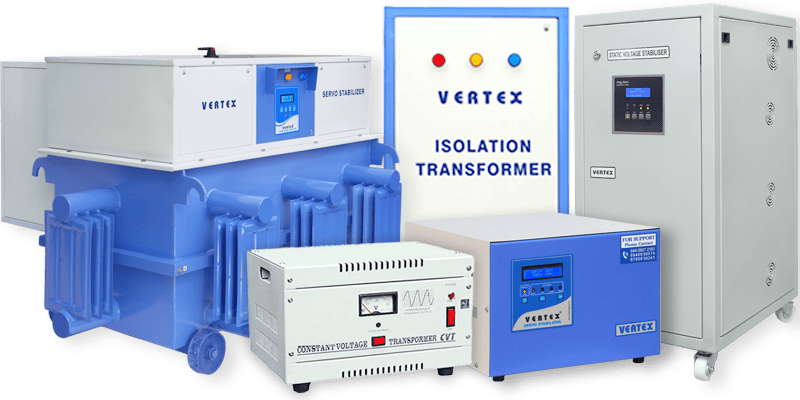
This is why many factories choose a servo voltage stabilizer as part of their electrical infrastructure. A well-designed servo voltage stabilizer in India helps regulate incoming voltage and provides a more consistent supply to connected loads. For industrial buyers, the benefits go beyond equipment protection. Stable voltage can support production continuity, improve machine reliability, and reduce avoidable electrical problems.
The effectiveness of the system, however, depends on correct sizing, engineering quality, and service support. Working with an experienced servo stabilizer manufacturer or a dependable servo voltage stabilizer supplier can make a major difference in long-term performance.
Industrial Machinery Needs More Than Just Available Power
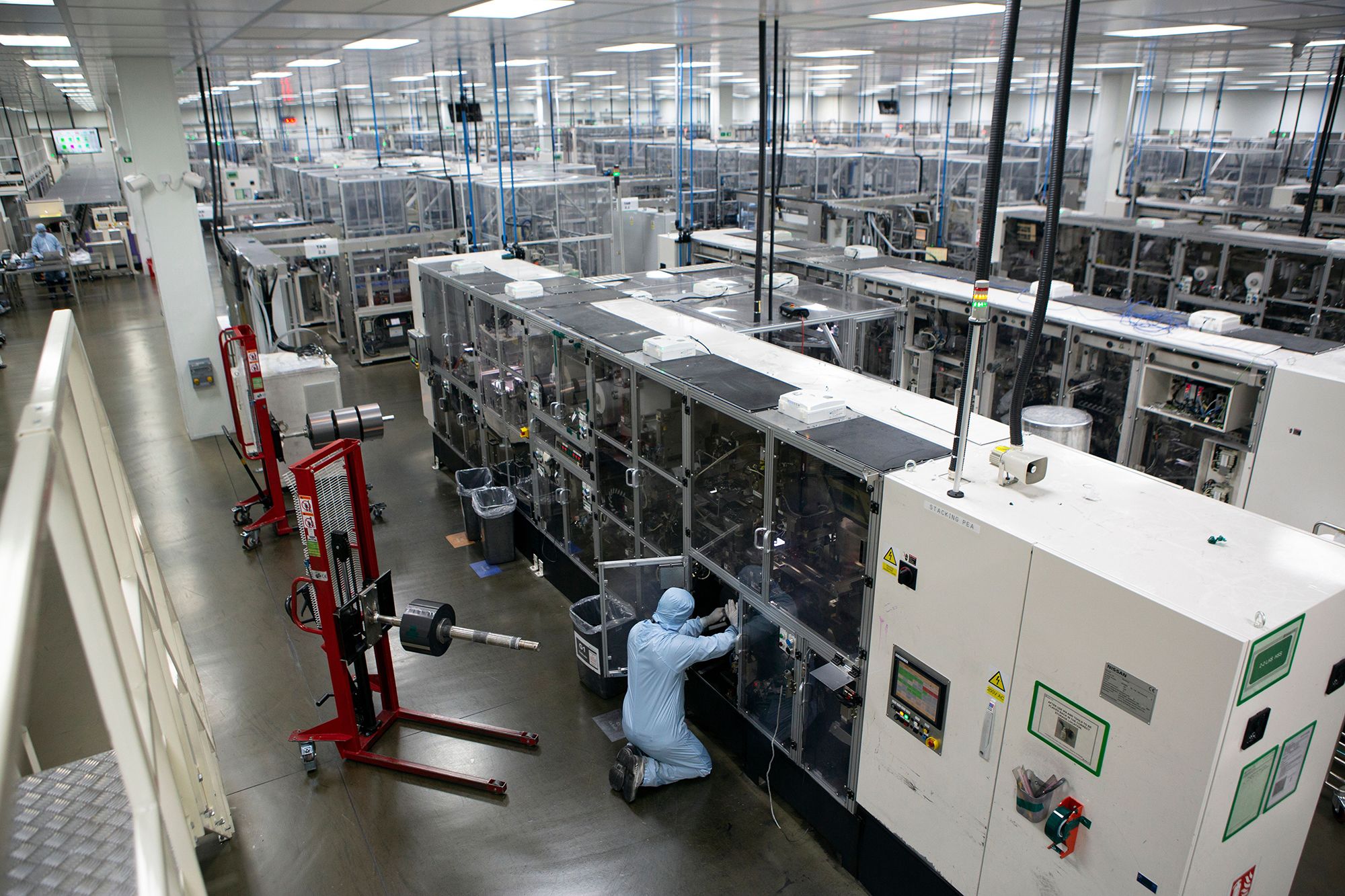
Having electricity available does not necessarily mean the power quality is suitable for industrial machinery. A factory may receive continuous power even while experiencing voltage outside the recommended operating range for its equipment. Consider a production floor where a large motor starts while several other machines are already operating. The sudden change in load can contribute to a temporary voltage drop. In another facility, changing grid conditions may cause the supply to remain above or below the desired level for extended periods.
These conditions can affect motors, drives, contactors, relays, control boards, and other electrical components. Low voltage may cause some motors to draw more current to deliver the required mechanical output, while excessive voltage can increase electrical and insulation stress. Sensitive electronic controls may also behave unpredictably when the supply moves outside their acceptable limits.
What Happens Inside a Servo Voltage Stabilizer?
The basic purpose of a servo stabilizer is straightforward: detect changes in input voltage and correct them to maintain the required output voltage. In a conventional servo-controlled system, a sensing and control circuit continuously monitors the voltage. When the input moves away from the preset range, the control mechanism operates a servo motor connected to a variable transformer arrangement. The system adjusts the correction voltage until the output returns to the required level.
The exact design can vary depending on whether the application is single-phase or three-phase, balanced or unbalanced, air-cooled or oil-cooled, and according to the required capacity and input range. A professional servo stabilizer manufacturer should therefore study the actual application before recommending a model. A stabilizer intended for a small commercial load should not be selected using the same assumptions as a unit designed for a large manufacturing facility.
Industrial plants generally consider factors such as connected load, maximum demand, starting current, voltage variation at the site, duty cycle, ambient conditions, and planned expansion. Correct engineering at the selection stage is essential because even a high-quality stabilizer may perform poorly if it is incorrectly sized.
The Practical Reasons Factories Continue to Choose Servo Technology
Industrial buyers rarely invest in electrical equipment simply because the technology sounds impressive. They look for measurable operational value. Servo voltage stabilizers remain widely used because they address several everyday challenges faced by factories.
More Consistent Operation of Connected Equipment
Machinery generally performs best when supplied within its specified voltage limits. By correcting incoming fluctuations, a servo stabilizer helps connected equipment operate under more consistent electrical conditions.
This is particularly useful in plants with production processes that depend on repeatability. If voltage instability causes machines to trip, restart, or behave inconsistently, the effect can extend beyond the electrical system and influence production schedules.
Reduced Exposure to Harmful Voltage Conditions
Repeated low-voltage and high-voltage events can place stress on electrical components. Stabilization reduces the amount of unacceptable voltage variation reaching connected loads, subject to the stabilizer’s specified correction range and protection design.
For businesses operating expensive machinery, preventing avoidable electrical stress is often more economical than repeatedly replacing damaged components.
Support for Production Continuity
A voltage-related trip can stop one machine or interrupt an entire process. In continuous production environments, even a short interruption may lead to material waste, restart procedures, delayed output, and additional labour.
A properly selected servo voltage stabilizer in India can help reduce interruptions associated with correctable voltage variations. It cannot prevent every electrical fault or utility outage, but it can address the specific problem of unstable voltage within its operating limits.
Long-Term Asset Protection
Industrial machinery represents a significant capital investment. Extending useful equipment life is therefore an important business objective.
A stable electrical environment can help reduce unnecessary stress on motors, electronic controls, transformers, and related components. This is one reason many plant managers consider voltage stabilization part of preventive asset management rather than merely an electrical accessory.
Why Industrial Plants Prefer Servo Voltage Stabilizer
Difference Between an Industrial Plant With and Without Voltage Stabilization
The practical value becomes clearer when the operating conditions are compared.
Operating Factor | Without Servo Voltage Stabilization | With a Properly Selected Servo Voltage Stabilizer |
| Incoming voltage variations | Reach connected equipment directly | Corrected within the stabilizer’s designed range |
| Machine operating conditions | May vary with supply quality | More consistent voltage environment |
| Voltage-related trips | Greater possibility | Can be reduced where fluctuations are the cause |
| Electrical component stress | Potentially higher | Reduced exposure to unacceptable voltage |
| Production continuity | More dependent on grid voltage quality | Better protected from correctable fluctuations |
| Maintenance planning | May include recurring voltage-related issues | More predictable when power quality improves |
| Equipment protection | Depends mainly on individual machine protection | Centralized voltage regulation can be added |
| Expansion planning | Power quality may become a growing concern | Stabilizer capacity can be planned around future loads |
Manufacturer, Supplier, or Lowest Quotation: What Should Guide the Decision?
Industrial procurement often begins with multiple quotations. Price matters, but two stabilizers with the same kVA rating may not necessarily be equivalent.
The design of the transformer, quality of winding materials, control system, protection features, enclosure, cooling arrangement, testing process, and service capability can all affect long-term performance.
A capable servo stabilizer manufacturer should be able to explain why a particular model suits the application rather than simply offering a capacity based on a rough estimate. Technical discussions should cover input range, output requirements, load characteristics, installation conditions, and future expansion.
Reliable servo voltage stabilizer suppliers also play an important role, especially when they provide local coordination, installation assistance, and service support. The key is to verify that the supplier understands the product and can provide dependable support after installation.
Before finalizing an order, industrial buyers should examine technical specifications carefully. Important questions include whether the quoted capacity matches the actual load, whether the input voltage range reflects site conditions, what protections are included, how the equipment is tested, and what warranty and service arrangements are available.
The cheapest quotation may reduce initial expenditure, but an incorrectly specified system can create much higher costs later.
Building a Better Voltage Protection Strategy for the Future
Factories are becoming more automated, connected, and dependent on electronic controls. As this transition continues, power quality becomes increasingly important.
A modern industrial voltage protection strategy should begin with understanding the electrical environment. This may involve monitoring voltage patterns, identifying critical loads, reviewing existing protection systems, and planning for future machinery.
The servo stabilizer should then be selected as one part of that strategy.
For example, a plant may require a servo stabilizer for voltage regulation, a UPS for uninterrupted power to critical electronic systems, surge protection for transient events, and proper earthing for electrical safety. Each device addresses a different risk.
Choosing a reliable servo voltage stabilizer in India therefore involves more than purchasing a machine from a catalogue. It requires matching the solution to the actual electrical problem.
Businesses should also consider maintainability. Access to spare parts, qualified service personnel, preventive maintenance, and technical support can influence the total cost of ownership over many years.
This is where the relationship with a dependable servo stabilizer manufacturer and established servo voltage stabilizer suppliers becomes valuable. Good technical support does not end when the equipment is delivered; it continues through installation, commissioning, maintenance, and future system changes.
Conclusion:
The right solution begins with accurate assessment and correct sizing. An experienced servo stabilizer manufacturer can help determine the appropriate configuration, while reliable servo voltage stabilizer suppliers can support installation and ongoing service.
As industries continue to modernize, demand for dependable servo voltage stabilizer in India solutions is likely to remain strong. The goal is not simply to buy a stabilizer—it is to create an electrical environment in which valuable equipment can operate as reliably as possible.
FAQ
1. Why do industrial plants use servo voltage stabilizers?
Industrial plants use servo voltage stabilizers to correct incoming voltage variations and provide a more stable supply to machinery, control systems, and other electrical loads.
2. How do I choose a reliable servo stabilizer manufacturer?
Choose an experienced servo stabilizer manufacturer that evaluates your load, site voltage range, application, protection requirements, testing standards, warranty, and service needs.
3. What should I check when comparing servo voltage stabilizer suppliers?
Compare the technical specifications, product quality, installation support, service capability, spare-parts availability, warranty terms, and experience of servo voltage stabilizer suppliers.
4. Why is a servo voltage stabilizer in India important for industries?
A servo voltage stabilizer in India can help industries manage site-specific voltage fluctuations and protect machinery that requires a consistent operating voltage.
5. Can a servo voltage stabilizer reduce machine downtime?
It can help reduce downtime when unstable input voltage is the cause of equipment trips or interruptions. It does not prevent outages or unrelated mechanical and electrical faults.
6. How is the correct stabilizer capacity selected?
Capacity should be based on connected load, maximum demand, starting current, load characteristics, future expansion, and the actual voltage conditions at the installation site.
7. Does a servo voltage stabilizer require maintenance?
Yes. Periodic inspection and preventive maintenance help maintain reliable performance, especially in demanding industrial environments.
8. Can one servo stabilizer protect an entire industrial plant?
A correctly designed centralized system can regulate voltage for multiple connected loads. However, the suitability depends on total capacity, load distribution, voltage conditions, and the plant’s electrical design.